
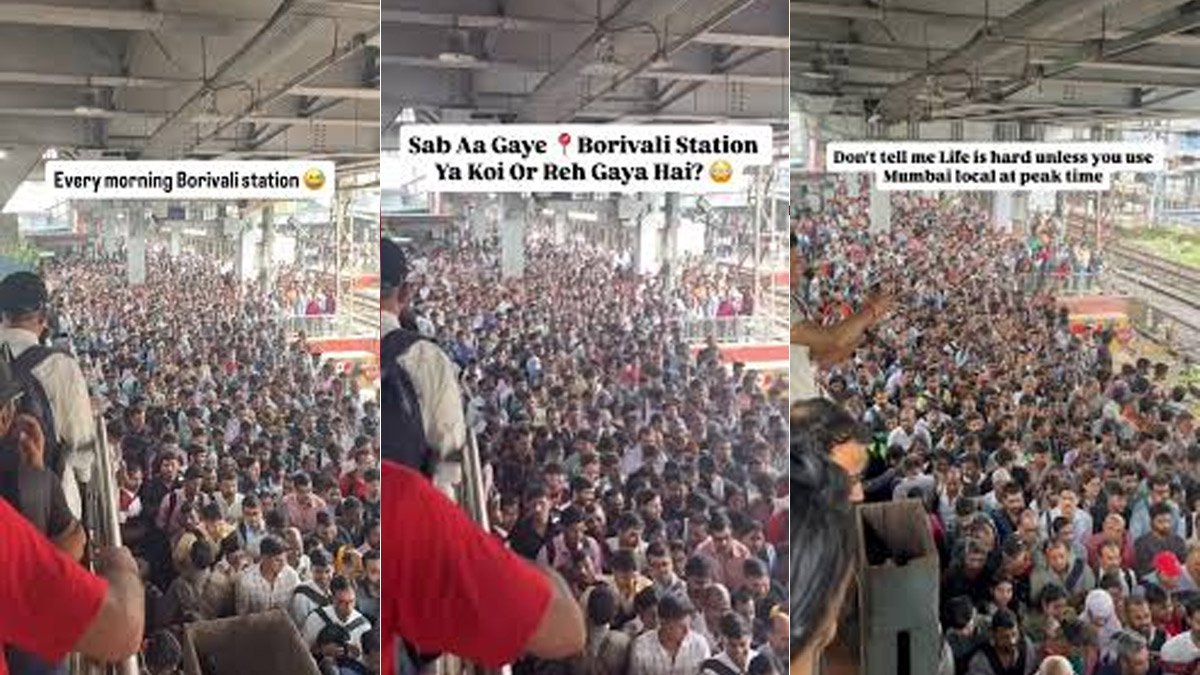
MUMBAI: Mumbai’s suburban railway has once again shown it can pack more than just trains, this time, the platform itself is bursting at the seams.
A video showing extreme overcrowding at Borivali Railway Station during peak morning hours has gone viral, triggering widespread concern over commuter safety and the network’s capacity to cope with daily demand.
Govt will not take any steps that could make their miserable lives even a little more tolerable. pic.twitter.com/hZb9mfJTgV
— Dr Ranjan (@DocRGM_) April 11, 2026
Shot from a foot overbridge, the footage captures dense crowds surging towards platforms with barely any space to move. The scenes have raised fears of a potential stampede-like situation, especially during rush hours when suburban stations witness their heaviest footfall.
While the exact date of the video remains unverified, it has ignited heated debate on social media. Many users criticised authorities for failing to address chronic overcrowding, while others pointed to unchecked migration as a major contributing factor. One comment read, “Time to stop migration to Mumbai. It’s overload now.” Another questioned ongoing upgrades, noting that “automated doors will not solve the capacity problem.”
The video has emerged amid efforts to improve safety following tragedies such as the Mumbra incident. Authorities are introducing non-air-conditioned local trains with automatic doors to prevent passengers from hanging out of overcrowded coaches. A new 12-car rake built by the Integral Coach Factory is expected to undergo trials under Central Railway after inspection at the Kurla Carshed.
However, critics argue that while such measures may enhance safety, they do little to tackle the root issue of insufficient capacity in the face of rising demand.
Mumbai’s suburban railway, often called the city’s lifeline, carries millions of passengers daily. The latest viral footage has once again spotlighted the urgent need for long-term solutions, including capacity expansion, improved crowd management, and better integration with other transport modes like the metro.
In a city that never stops moving, the platforms at Borivali have sent a clear signal, when the daily commute becomes this crowded, even standing room becomes a luxury and safety concerns can no longer be pushed aside.