
MUMBAI: A mother cradling the divine. An 1890s oil painting. And a hammer price that just rewrote Indian art history. Raja Ravi Varma’s Yashoda and Krishna sold for Rs 167.2 crore ($17,978,495) at Mumbai auction house Saffronart, making it the highest-value work of modern Indian art ever sold at auction. The painting had been estimated at Rs 80 to 120 crore. It blew past that with ease.

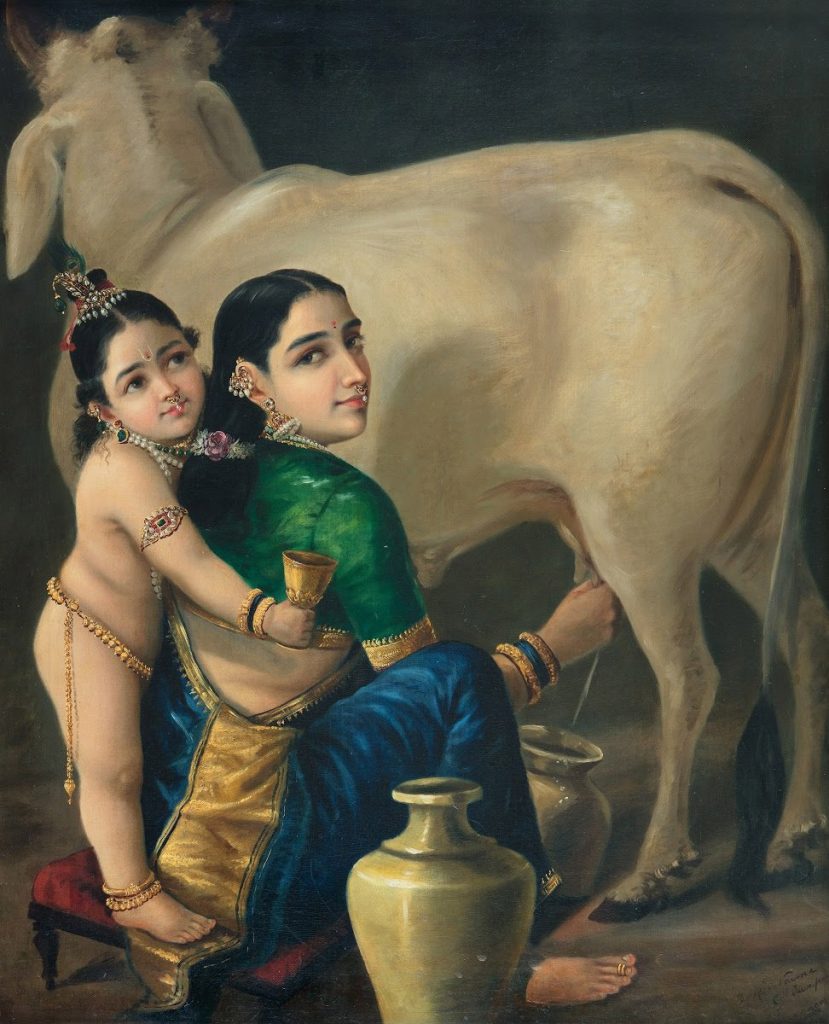
The buyer was Cyrus S Poonawalla, chairman and managing director of the Serum Institute of India, who described the acquisition in terms that went beyond mere collecting. “This national treasure deserves to be made available for public viewing periodically, and it will be my endeavour to facilitate this going forward,” he said.
The sale obliterates the previous record, held by MF Husain’s Untitled (Gram Yatra), which fetched Rs 118 crore ($13.8 million) at auction last year. The margin of victory, nearly Rs 50 crore, speaks to the surging appetite among Indian collectors for works of genuine historical weight.
Varma, born in 1848 in Kilimanoor, Kerala, remains one of India’s most celebrated painters, famed for bringing Indian mythological subjects to life through oil on canvas. His portrayals of Shakuntala, Sita, Damayanti and Draupadi have shaped the visual imagination of generations. Yashoda and Krishna, painted at the height of his powers in the 1890s, captures an infant Krishna leaning into his mother in a moment of luminous tenderness.
Pooyam Thirunal Gouri Parvathi Bayi, who belongs to the erstwhile royal family of Travancore and is Varma’s descendant, welcomed both the sale and its outcome. “I am proud that my great-grandfather is getting the recognition he deserves,” she said. “At one time in the 20th century, he was ridiculed as a poster painter. But now, he is honoured for his artistic legacy and skill. He did not paint to please critics or buyers.” She added a pointed note for the new owner: “It remains to be seen how the collector will ensure that this work is able to be seen and appreciated by art lovers.”
Minal Vazirani, president and co-founder of Saffronart, was characteristically bullish. “Great art has a way of reaffirming its timeless value,” she said. “It is not just a milestone for the market, but a powerful reminder of the enduring cultural and emotional resonance of Indian art.”
A painting that once hung in a studio in 19th-century India has just sold for nearly $18 million in the 21st century. Varma, who spent his career being told he was too populist, too accessible, too commercial, would likely have found that rather satisfying.