

MUMBAI: When the sun is at its most punishing, Maharashtra wants its outdoor workers off the streets. The state government has issued a comprehensive Standard Operating Procedure mandating a compulsory work halt between noon and 4 pm during severe heat alerts, in what is one of India’s most assertive attempts yet to protect informal workers from the deadly consequences of extreme summer heat.
The guidelines, announced by state disaster management minister Girish Mahajan, will apply across all urban local bodies, including municipal corporations, councils and nagar panchayats, in high-risk areas. During orange and red heat alerts, outdoor working hours must be rescheduled to cooler parts of the day, typically 6 am to 11 am and 4 pm to 8 pm, with the afternoon window strictly enforced as a rest period.
“Maharashtra has several districts facing extreme heat conditions, which impact health and can even lead to fatalities,” Mahajan said. “This SOP aims to protect people exposed to such risks.”
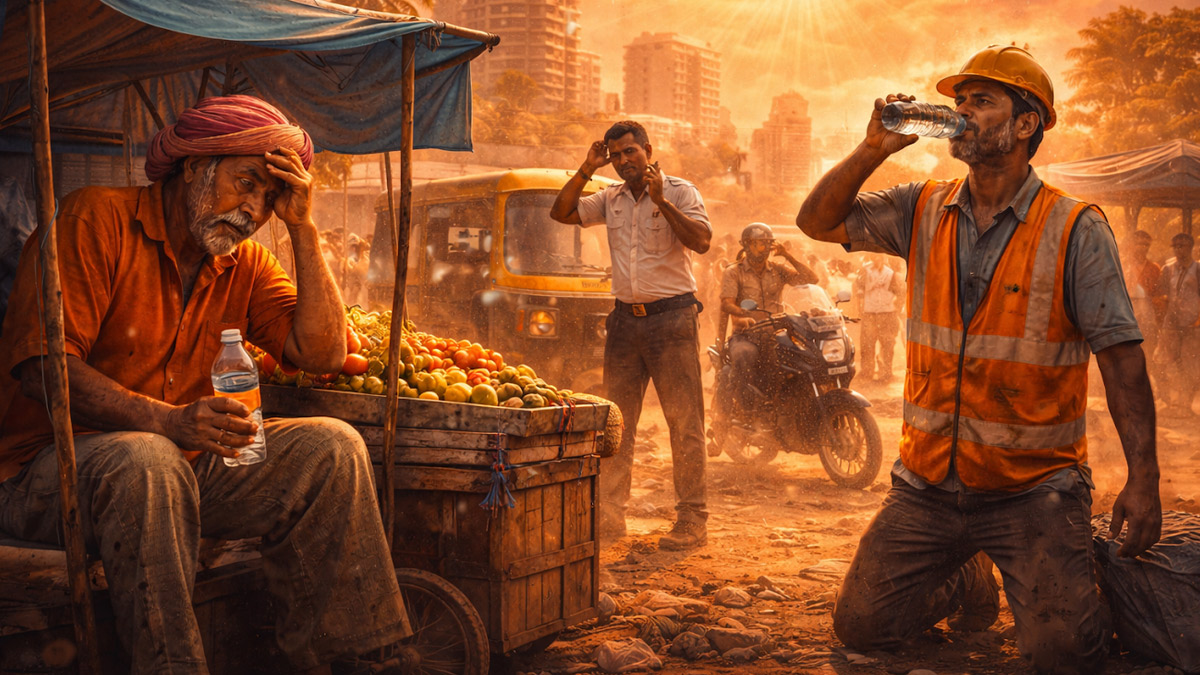
The directive takes direct aim at those most vulnerable to the heat: street vendors, construction labourers, sanitation workers, traffic police, gig and delivery workers, rickshaw pullers, porters and ASHA and anganwadi workers. It is a long and telling list, a reminder of just how many Indians earn their living entirely at the mercy of the elements.
The practical measures are wide-ranging. Water booths are to be installed at markets, traffic junctions, transit hubs and vending zones. Oral Rehydration Solution and electrolyte sachets will be distributed through primary health centres, ward offices and NGOs. Temporary shade structures must go up at labour chowks and busy intersections, and public parks and gardens are to remain open through the afternoon so that workers have somewhere cool to shelter.
The SOP also flags gender-sensitive provisions, mandating adequate lighting, secure transport and protective arrangements for women workers operating during early morning or late evening hours, a quiet acknowledgment that vulnerability to heat is rarely the only hazard they face.
Maharashtra is among the ten most heat-vulnerable states in India. Its Heat Action Plan identifies 15 districts across the Vidarbha, Marathwada and Khandesh regions as high-risk zones, including Nagpur, Chandrapur, Amravati and Latur. The rules will apply to these districts and to Mumbai when heatwave conditions prevail.
Looking further ahead, the government has announced a dedicated disaster management training and research centre in Nagpur, focused on extreme heat mitigation and sustainable cooling strategies, at a cost of Rs 184 crore. Employers and market associations have been encouraged to invest in permanent shade structures and cool roofing systems.
India loses hundreds of lives to heatstroke each summer. Maharashtra has now put a policy on paper. The harder test, as ever, will be enforcement on the ground, in the scorching, chaotic reality of the labour chowk.