
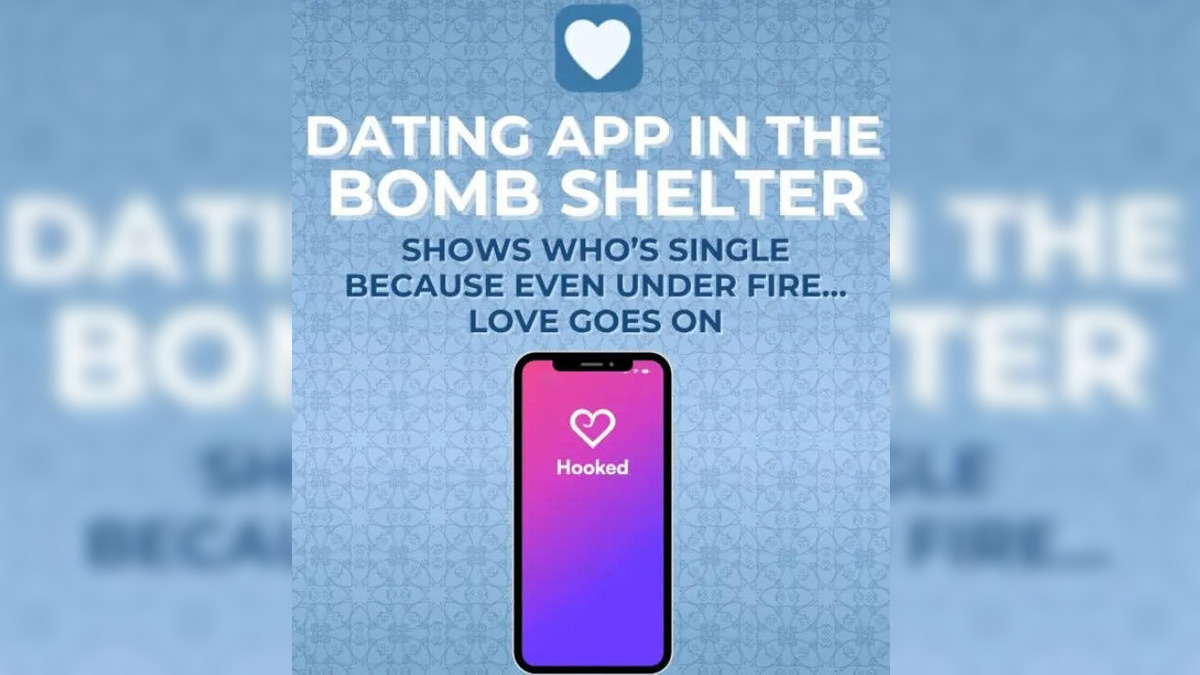
TEL AVIV: In early March 2026, Israel’s ministry of foreign affairs found itself at the centre of a global social media storm after promoting a peculiar initiative: bomb shelter dating.
The campaign, shared on the official @Israel X (formerly Twitter) account, suggested citizens could find romance while hiding from air-raid sirens. The ministry pitched it as a way to stay connected even in the most stressful circumstances.
But this wasn’t a new app. Instead, it was a twist on an existing speed-dating platform called Hooked. QR codes were placed at bomb shelter entrances so singles could see who else was in the bunker during missile alerts. The ministry described the feature as a way to “show who’s single because even under fire, love goes on.”
The dating idea was part of a broader showcase of what Israel called “Startup Nation” ingenuity during conflict. Other features included a shower risk predictor, which supposedly calculates the safest time to wash without being caught mid-shampoo during an alert, and a sleep loss tracker to tally how much shut-eye was lost due to sirens and emergency runs.
Reaction was swift and brutal. Critics called the campaign dystopian, tone-deaf, and sick, accusing the ministry of trying to gamify life in a war zone. Many labelled it propaganda or “pinkwashing” and condemned it as war profiteering dressed up as innovation.
Some officials, like mike huckabee, U.S. ambassador to Israel, responded with humour on X, joking that “someday they’ll tell their kids we met on a dating app in a shelter while dodging ballistic missiles.” But for most of the public, the campaign was a PR disaster, a misguided attempt to turn trauma into a quirky tech moment.
Whether love can really bloom amid sirens and chaos remains doubtful, but one thing is clear, some ideas are better left in the lab.