

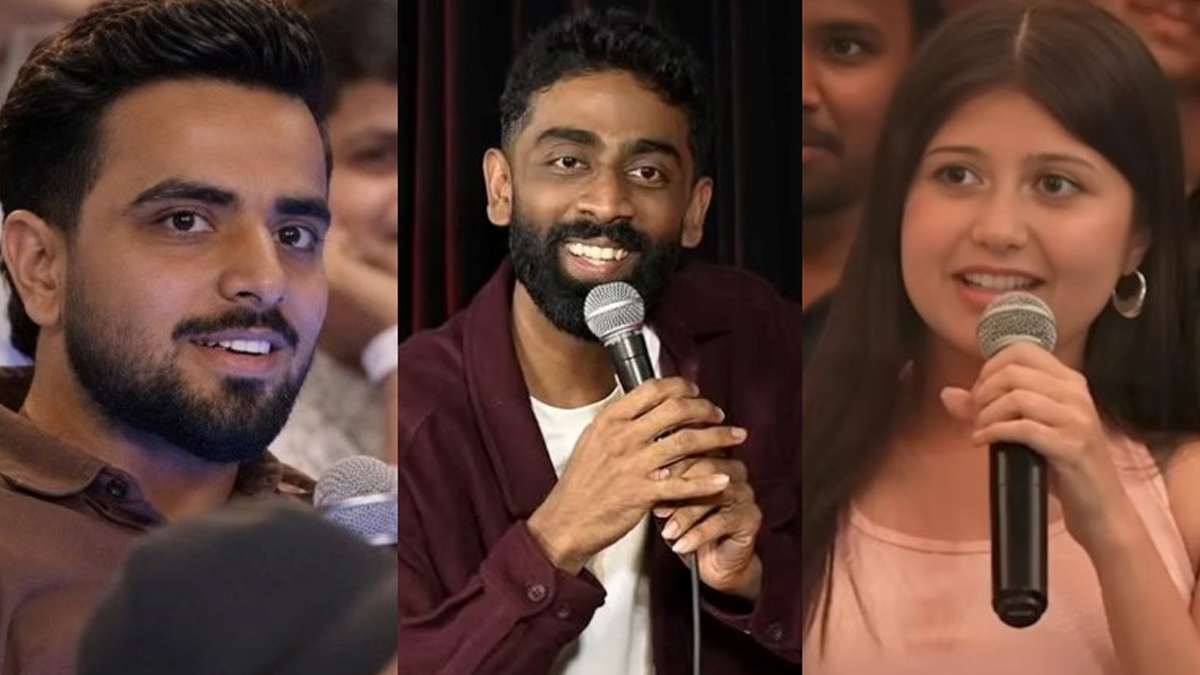
MUMBAI: A throwaway anecdote about a date-night dinner has, in the space of a week, become one of the more revealing cultural flashpoints India has produced in a while. The “Rs 370 biryani” story did not begin as news. It began as crowdwork that loose, improvisational corner of stand-up comedy where a performer pulls a stranger from the audience and turns their life into material for a few minutes of laughs.
How it started
During one such segment on comedian Pranit More’s show, a 23-year-old Gurugram-based web developer, Himanshu Jangra, recounted a date. He mentioned spending around ₹370 on a plate of chicken biryani and a bottle of water, and then said that because he had paid for the meal, he expected “wasool,” a return on his investment, a phrase widely read as a reference to physical intimacy he felt entitled to despite the woman’s refusal. Most of the criticism that followed was directed at this remark, though More himself was also criticised for laughing along and calling it “peak Gurgaon content” before encouraging the man to continue.
The clip did what viral clips do: it travelled far beyond the room it was recorded in, stripped of tone, context and the layered irony that live comedy often relies on. And the internet, predictably, did not laugh, it recoiled.
From a joke to a job loss
What makes this controversy different from the usual cycle of online outrage is how quickly it moved from social media to material consequence. Jangra lost his job after his employer, a Gurugram-based company, decided the remarks had begun affecting the workplace, its reputation, its team, and its relationships with clients. The company’s framing was careful: this was not about misconduct inside the office, but about an employee’s public conduct becoming inseparable from the organisation’s image.
That framing is exactly where the controversy gets interesting and uncomfortable.
Angle one: the consent conversation India keeps avoiding
Strip away the biryani and the punchline, and what’s left is a worldview: that money spent on a woman creates an obligation, that a “no” can be negotiated against a receipt. This is not a new idea in Indian dating culture, it has simply rarely been said out loud, on camera, to thousands of strangers. Many commentators have pointed out that the remark exposed a transactional view of relationships, where paying for a meal was treated as creating leverage over consent.
In that sense, the controversy did something useful that a thousand awareness campaigns haven’t: it made an ordinary, often-unspoken attitude visible, and forced a national audience to react to it in real time. The discomfort many people felt watching the clip wasn’t really about one 23-year-old, it was recognition. Variations of that sentence have been said, half-jokingly, in friend circles and group chats for years.
Angle two: the punishment-to-offence ratio
But the speed and finality of the consequence, a man fired from his job over a comment made in a comedy club, however ugly raises a separate, harder question that the consent conversation tends to swallow whole: what is proportionate accountability in the age of viral clips?
There is a real difference between social condemnation (being called out, criticised, even shamed publicly) and economic punishment (losing one’s livelihood) for words spoken in a non-professional setting. Companies increasingly justify such decisions through the language of “reputational risk” rather than conduct which quietly outsources moral judgment to whichever mob is loudest that week, and gives corporations a ready-made excuse to discard people the moment they become inconvenient. Today it’s a sexist remark; tomorrow it could be a political opinion, a religious view, or a joke that ages badly only in retrospect. The Jangra case may be the easiest one to defend a firing over but easy cases are exactly how broader precedents get set.
Angle three: the comedian’s dilemma and the second controversy
Pranit More’s position adds another layer. He later apologised, saying he should have challenged the remark instead of laughing it off, calling it “a lapse in judgement.” Crowd work comedians occupy a strange role part entertainer, part unwitting documentarian of whatever a stranger chooses to reveal about themselves. The genre depends on spontaneity and a degree of audience vulnerability; the backlash now suggests audiences expect comedians to also function as moral referees in real time, which is a very different job description.
The story didn’t stop there. Within days, a second clip from the same show went viral, this time of a doctor, medical professional Sejal Pawar, making crude remarks about male cadavers during a discussion on medical training, which drew its own wave of criticism, particularly given her profession. Maharashtra Cyber has since filed an FIR against More, Jangra and Pawar over allegedly obscene content. Both Jangra and Pawar issued apologies Pawar specifically acknowledged that “impact matters more than intent.”
The deeper insight
What the “Rs 370 biryani” saga really exposes is the collapsing distance between private conversation and public record. A decade ago, a crass remark on a date or a tasteless joke in a comedy club audience would have evaporated by morning. Today it is a permanent, searchable, monetisable artifact and the punishment it invites is decided not by courts, employers’ HR policies, or even by the people directly affected, but by an anonymous, fast-moving, often inconsistent collective that has no appeals process.
That’s worth sitting with regardless of which side of this particular story you find yourself on. The sentiment that triggered the outrage entitlement dressed up as a joke deserved scrutiny. But the mechanism that delivered the consequence instant, irreversible, decided by algorithm-amplified consensus is one that none of us, eventually, are immune to.
The biryani, for what it’s worth, was probably quite good. Everything that came after it is the part the country will be chewing on for a while.