
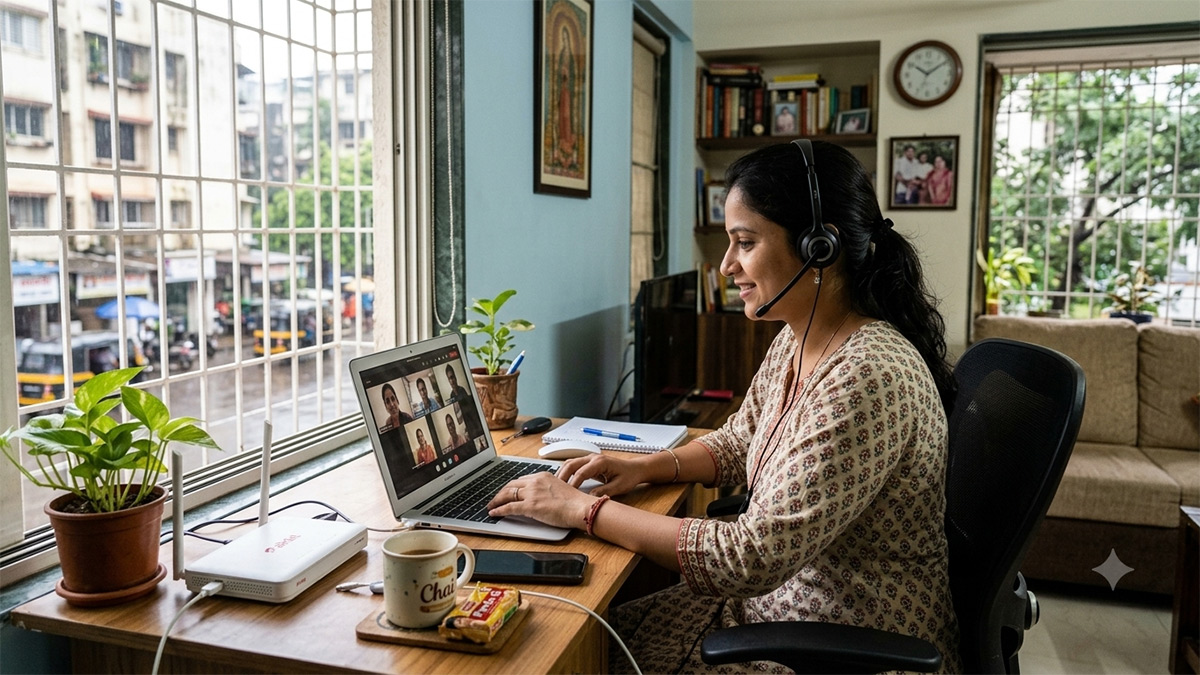
GURUGRAM: Work from home is getting a fresh “home-run” in Haryana’s traffic playbook, as the state looks to ease the daily grind on its overcrowded roads. The Haryana government has urged private companies to adopt work-from-home policies and staggered office timings under a broader push often described as WFH 2.0. The idea is simple: reduce the daily rush, ease fuel demand, and take pressure off overburdened roads in the Gurgaon and the wider National Capital Region.
According to a report by Times of India, the state has directed its industries department to work with industry bodies including Nasscom, Confederation of Indian Industry and FICCI to encourage flexible work arrangements. Companies are being asked to allow remote work wherever feasible and stagger office hours to smoothen peak traffic flows.
The move is aimed squarely at Gurgaon, a key corporate hub often dubbed the Millennium City, where daily commuting volumes regularly choke arterial roads. Officials estimate that nearly five lakh vehicles enter the city daily from Delhi, Faridabad and other NCR areas, turning peak hours into long queues of slow-moving traffic.
The initiative also aligns with wider austerity measures already introduced across government departments. These include reducing official vehicle usage, cutting fuel consumption, and encouraging virtual meetings over physical travel.
The advisory has been issued by Anurag Rastogi, who pointed to ongoing global supply chain pressures linked to geopolitical tensions in West Asia. These disruptions have contributed to rising fuel prices and added strain on imports, prompting the state to look for conservation-driven solutions.
Alongside its appeal to private firms, the state has tightened internal cost controls. The finance department has been directed to reduce petroleum-related expenditure by 20 per cent until September, while departments must achieve at least a 10 per cent monthly reduction in vehicle usage. A monitoring portal will track compliance and savings across departments.
In a further push, the government has ordered a 50 per cent reduction in vehicles accompanying VIP convoys, subject to security requirements, and temporarily banned the purchase of non-electric vehicles by government bodies, boards, corporations and commissions.
Citizens have also been nudged towards fuel-efficient habits, with encouragement to use public transport, carpool, and adopt electric vehicles. The advisory also discourages unnecessary foreign travel and large gatherings, while promoting local tourism, local products and energy conservation at home and workplaces.
Hotels, restaurants and households have been asked to prioritise PNG usage and maintain regulated air-conditioning settings to reduce energy consumption.
Officials confirmed that the directives have been circulated across all administrative departments, district authorities, universities, boards and corporations in Haryana for immediate implementation.
As WFH 2.0 gathers pace, the real test will be whether India’s corporate corridors can finally log off from traffic chaos and log in to a more flexible future.