
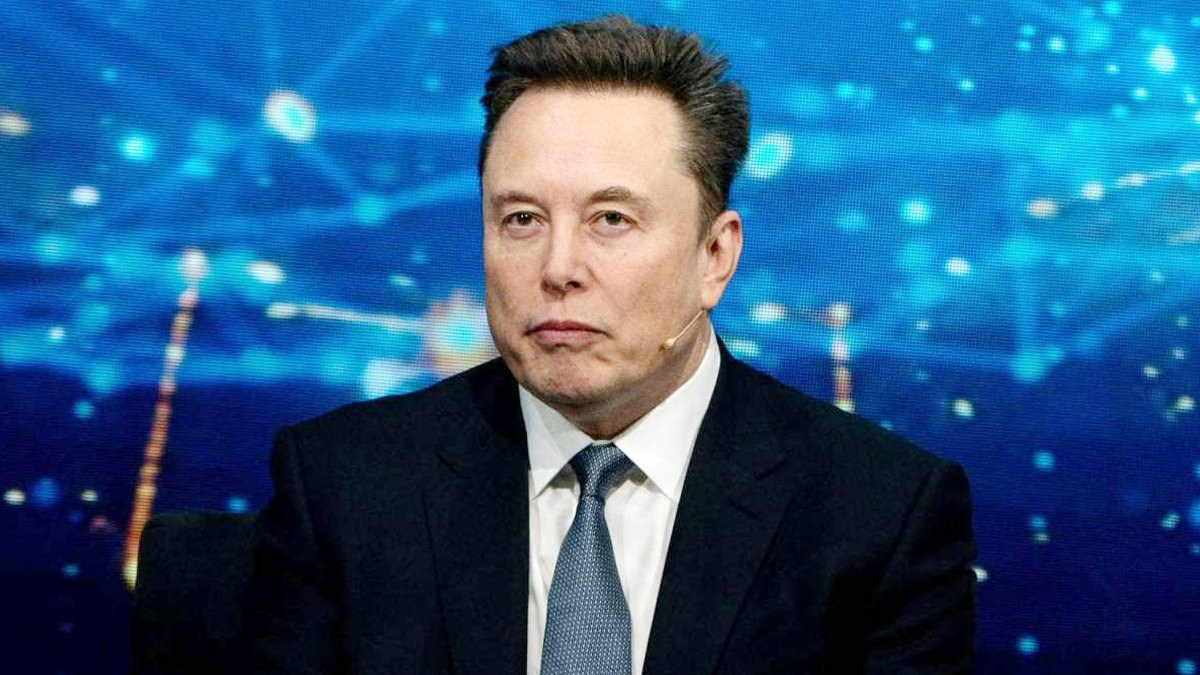
MUMBAI: Checkmate, or not quite? Elon Musk has sparked a fresh debate over whether chess can eventually be mathematically solved, after clashing with Chess.com over the sheer scale of the game’s possibilities.
The exchange began after Chess.com argued on X that there are more possible chess games than atoms in the observable universe, citing the enormous number of potential game sequences. Musk countered that this comparison confuses possible games with legal chess positions.
Musk argued that the number of legal chess positions is around 40 orders of magnitude lower than the estimated number of atoms in the universe. He added that artificial superintelligence could eventually discover ways to solve and compress the complexity of chess that are beyond current human understanding.
The comments followed an earlier post in which Musk said chess is difficult for humans but not for computers and predicted that it would eventually be fully solved, much like checkers.
The disagreement centres on two different ways of measuring chess complexity.
The Shannon number, named after mathematician Claude Shannon, is commonly used to illustrate the enormous number of possible chess game variations. It is generally estimated at around 10¹²⁰ possible game sequences, far exceeding estimates for the number of atoms in the observable universe.
Musk’s argument focuses instead on unique legal positions that can arise on a chessboard. While the number is still extraordinarily large, it is substantially smaller than the number of possible game sequences because many different move histories can lead to the same position.
That distinction is important when discussing what it would mean to “solve” chess. A solved game would require determining the theoretically optimal outcome and strategy from every relevant position, rather than simply listing every possible sequence of moves.
The latest exchange also revives Musk’s long-running scepticism about chess.
In 2022, Musk said he had played chess as a child but regarded the game as too simple to be particularly useful in real life. He contrasted its fixed board and rules with strategy games that include elements such as hidden information, technology progression and randomised maps.
Chess.com subsequently published a lengthy response mocking Musk’s assessment and highlighting the complexity created by rules and pieces that make chess far less straightforward than its basic board might suggest.
The platform has again joined the conversation with a more playful tone, turning the latest mathematical disagreement into a social media sparring match.
Modern chess engines can already outperform even the strongest human players in practical games. Stockfish and other engines can analyse positions at extraordinary depth, but that does not mean chess has been mathematically solved.
Checkers, by contrast, was weakly solved in 2007, when researchers demonstrated that perfect play from both sides results in a draw.
Chess is considerably more complex. The challenge is not simply having a computer powerful enough to calculate a large number of moves, but developing a mathematically complete solution across the game’s enormous state space.
Musk’s latest argument suggests that future AI systems may approach the problem in ways that do not rely on brute-force calculation alone. Whether artificial superintelligence will ultimately find a shortcut remains an open question, leaving the world’s favourite board game firmly in play.