

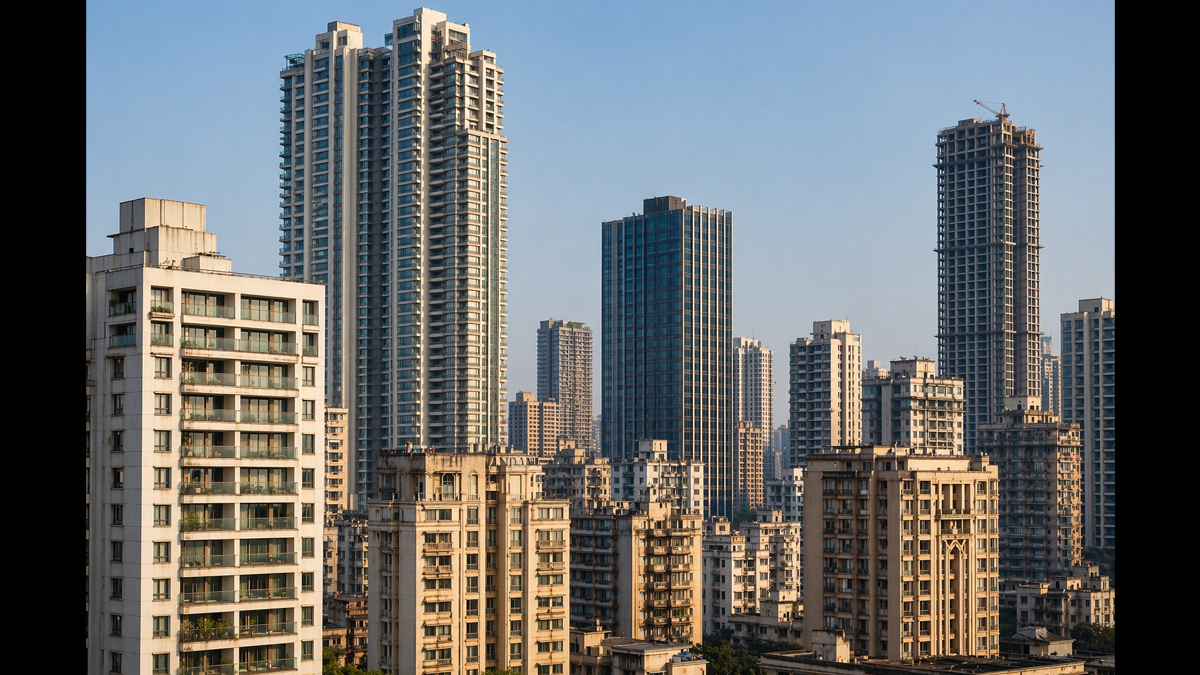
MUMBAI: Mumbai’s property market has a new distinction: it is the only major Indian city where $1 million now buys less real estate than it did five years ago. According to the Wealth Report 2026 by Knight Frank, released on Thursday, a budget of $1 million (roughly Rs 9.4 crore) fetched 96 sq m (1,033 sq ft) in the fourth quarter of 2025, down from 106 sq m (1,141 sq ft) in the fourth quarter of 2020, a decline of nearly 9 per cent.
The drivers are familiar: limited land, coastal constraints and relentless appetite from global investors. Together, they have kept prices climbing even as buyers find themselves getting progressively less for their money.
The contrast with India’s other big cities is striking. In Delhi, the area purchasable for $1 million edged up from 202 sq m to 205 sq m over the same five-year period. Bengaluru did marginally better, rising from 351 sq m to 357 sq m. Neither city offers dramatic gains, but the direction of travel is the opposite of Mumbai’s.
Globally, Mumbai’s 9 per cent decline in purchasing power is far from the worst. Dubai recorded the steepest fall at 66 per cent, followed by Tokyo at 41 per cent and Miami at 40 per cent. London bucked the trend with a 7 per cent increase in purchasable space, while Melbourne posted a modest 4 per cent gain and Hong Kong remained flat.
None of this has dented Mumbai’s allure for the ultra-wealthy. The city accounts for 35.4 per cent of India’s ultra-high-net-worth population, defined as individuals with at least $30 million in investable assets, excluding primary residences and collectables. In 2025 alone, Mumbai recorded 56 new-build residential transactions in the over-$5 million segment. India’s broader economy has helped: a 38 per cent expansion in GDP over the past five years has turbocharged wealth creation, particularly in technology, industry and capital markets.
That wealth is multiplying fast. Between 2020 and 2025, the number of Indians with assets exceeding $30 million rose 63 per cent, from just over 12,000 to 19,877, making India the sixth-largest ultra-high-net-worth market in the world. Knight Frank’s Wealth Sizing Model projects a further 27 per cent increase by 2031, taking that figure to 25,217.
“Mumbai’s continued dominance in India’s ultra-high-net-worth landscape reflects a deeper structural shift in the country’s wealth creation cycle,” said Shishir Baijal, chairman and managing director of Knight Frank India. “Proximity to business, lifestyle ecosystems and premium real estate creates a powerful value proposition,” he added.
The paradox is neat: Mumbai is getting richer and more crowded at the top, even as the space that money can buy quietly shrinks. For those writing the cheques, the city remains irresistible. They are simply getting a little less of it with every passing year.