
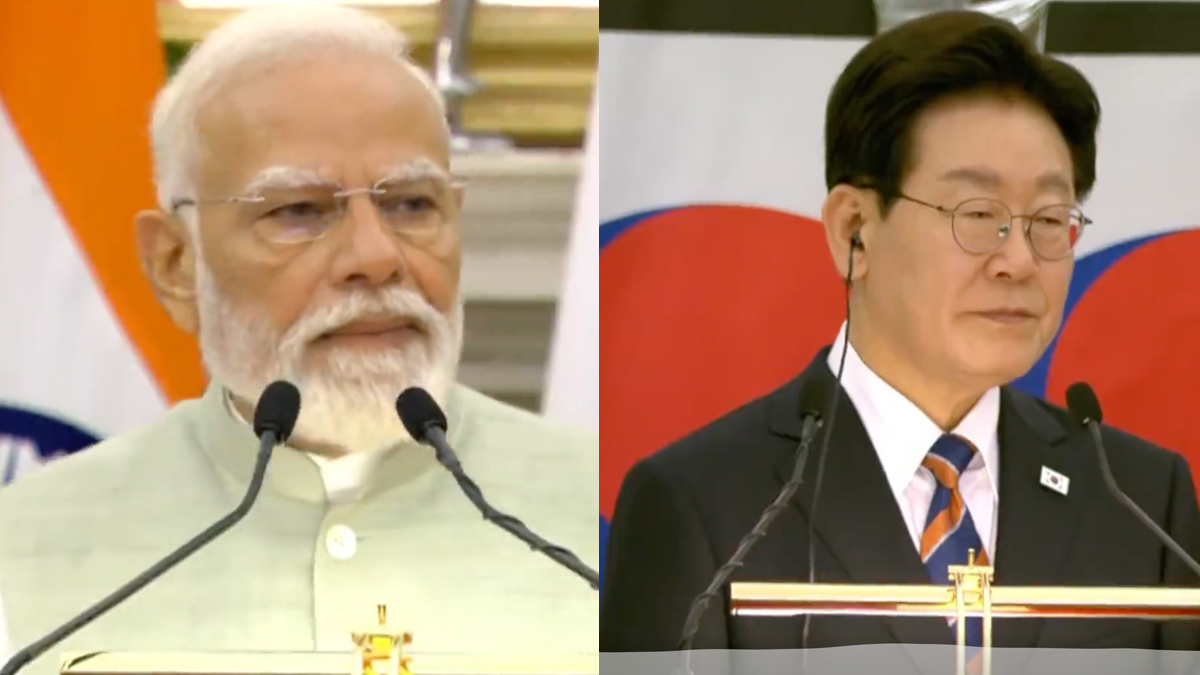
NEW DELHI: K-pop has conquered Hindi cinema’s backyard. As South Korean President Lee Jae-Myung wrapped up a three-day state visit to India on April 21st, Prime Minister Narendra Modi did something rare for a head of government: he gushed about Korean pop music and television dramas and meant it as diplomacy.
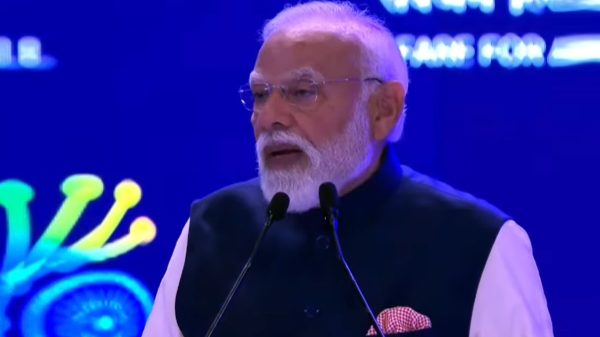
Speaking at a joint press briefing at Hyderabad House in New Delhi after bilateral talks, PM Modi announced the India-Korea Friendship Festival, set to launch in 2028, and pointed to the two countries’ surprisingly deep cultural roots. “K-pop and K-dramas are very popular in India,” he said, adding that Lee is himself a fan of Indian cinema. The mutual admiration, it turns out, runs in both directions.
The visit, focused on trade, defence, artificial intelligence and shipbuilding, produced more than pleasantries. India and South Korea agreed to establish a Mumbai-Korea Centre, envisioned as a hybrid K-pop performance venue and Bollywood hub, anchored by a 2026-2030 bilateral cultural exchange agreement. Korean cultural promotion in India is currently handled by the Korean Cultural Centre in New Delhi; the Mumbai centre would give Seoul a toehold in India’s commercial and entertainment capital.
PM Modi also invoked history to frame the partnership. He referenced the legend of Princess Suriratna of Ayodhya, known in Korea as Heo Hwang-ok, who according to the 13th-century Korean chronicle the Samguk Yusa, sailed to Korea around 48 AD to wed King Kim Suro of the Gaya Kingdom. She became Korea’s first queen and, by some genealogical reckonings, the ancestor of millions of Koreans. Her tomb sits in Gimhae, South Korea; a memorial park bearing her name, complete with a statue and traditional Korean architecture, keeps the legend alive. “The story of Princess Suriratna and King Kim Suro is part of our shared heritage,” PM Modi said.
The symbolism was deliberate. By weaving together a 2,000-year-old love story, a K-pop festival and a Mumbai cultural centre, PM Modi was making a pointed argument: that India and South Korea are not merely transactional partners haggling over trade deficits and defence contracts, but civilisational allies with roots deep enough to outlast any geopolitical weather.
Whether the Mumbai centre gets built on schedule, and whether the 2028 festival delivers on its promise, remains to be seen. But for now, the princess from Ayodhya is doing rather more diplomatic heavy lifting than any trade negotiator in the room.