
CALIFORNIA: For the past few years, artificial intelligence has been at the centre of a workplace revolution. As companies rushed to adopt AI tools capable of writing, coding, analysing data and handling customer queries, concerns grew over automation replacing human roles. Several major firms trimmed workforces while investing heavily in AI, fuelling fears that machines were becoming a cheaper and faster alternative to people.
Now comes an intriguing twist.
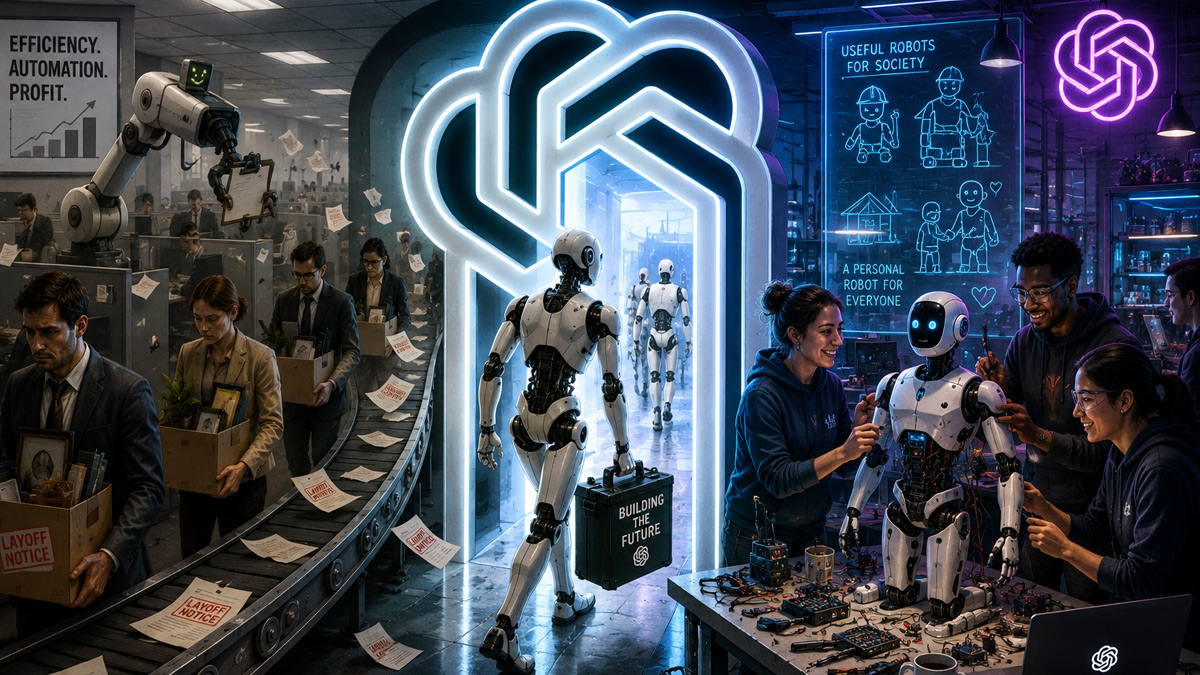
OpenAI, the company behind ChatGPT isn’t cutting jobs, it’s hiring. And not just a handful of engineers, but exceptional talent across hardware, machine learning, systems, operations and full-stack engineering to help build robots designed to operate in the physical world.
The recruitment drive marks a significant expansion of OpenAI’s robotics ambitions. In the near term, the company says it wants robots capable of assisting skilled workers in building and maintaining critical infrastructure. In the long run, its vision is even bolder: personal robots that can help people with everyday tasks.
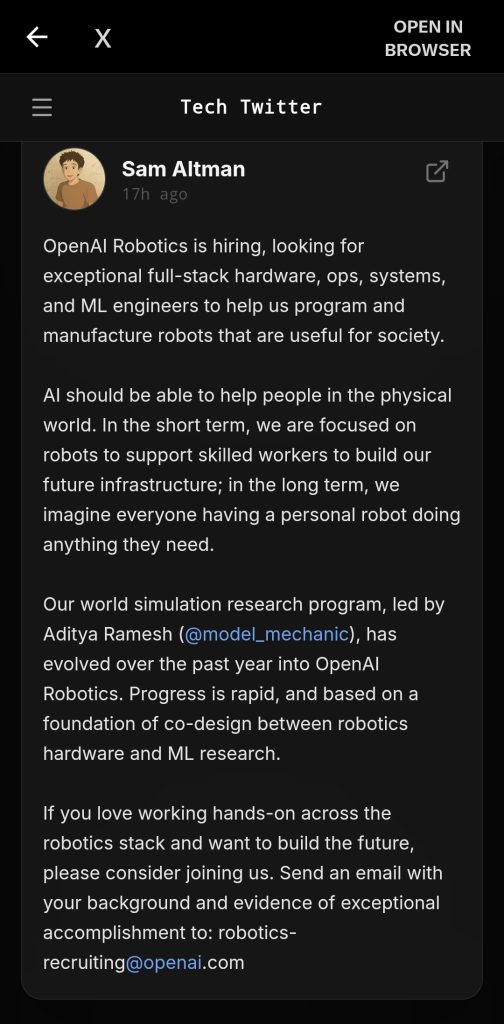
The initiative has grown out of OpenAI’s world simulation research programme, led by Aditya Ramesh, which has evolved into a dedicated robotics effort. The company says rapid progress has been driven by a close partnership between machine learning research and robotics hardware development.
Yet the announcement also raises a question that is becoming increasingly difficult to ignore.
If AI systems are already reshaping white-collar work, what happens when those same systems gain the ability to move, lift, build and interact with the physical world? Could robots eventually fill labour shortages and boost productivity or might they accelerate concerns about job displacement in sectors that have, until now, remained largely insulated from automation?
OpenAI has positioned its robotics programme as a tool to support human workers rather than replace them. But as AI capabilities continue to advance, the line between assistance and automation is likely to remain at the centre of a global debate.
For now, one irony stands out, the technology that many fear could reduce the need for human workers is creating a fresh race for talent of its own. To build smarter machines, OpenAI still needs some of the brightest human minds it can find.
First AI came for the spreadsheets. Now it wants a body to go with the brain.
Whether those machines ultimately create more jobs than they replace remains one of the defining economic questions of the AI era.