

MUMBAI: For the past two years, the world has been captivated by artificial intelligence’s visible stars. ChatGPT rewrote expectations around software. Elon Musk’s Grok challenged the AI establishment. Tech giants raced to unveil ever more powerful models capable of writing, coding, creating and reasoning.
But beneath the headlines, another race has been unfolding, one that may ultimately prove more consequential.
The battle for artificial intelligence is no longer just about who builds the smartest model. It is increasingly about who controls the infrastructure that makes those models possible.
And in that race, an unlikely winner has emerged,’Dell Technologies’.
The company that many still associate with laptops and enterprise computers is quietly becoming one of the most important players in the AI economy. Not because it builds AI models, but because it helps build the factories that power them.

That distinction matters.
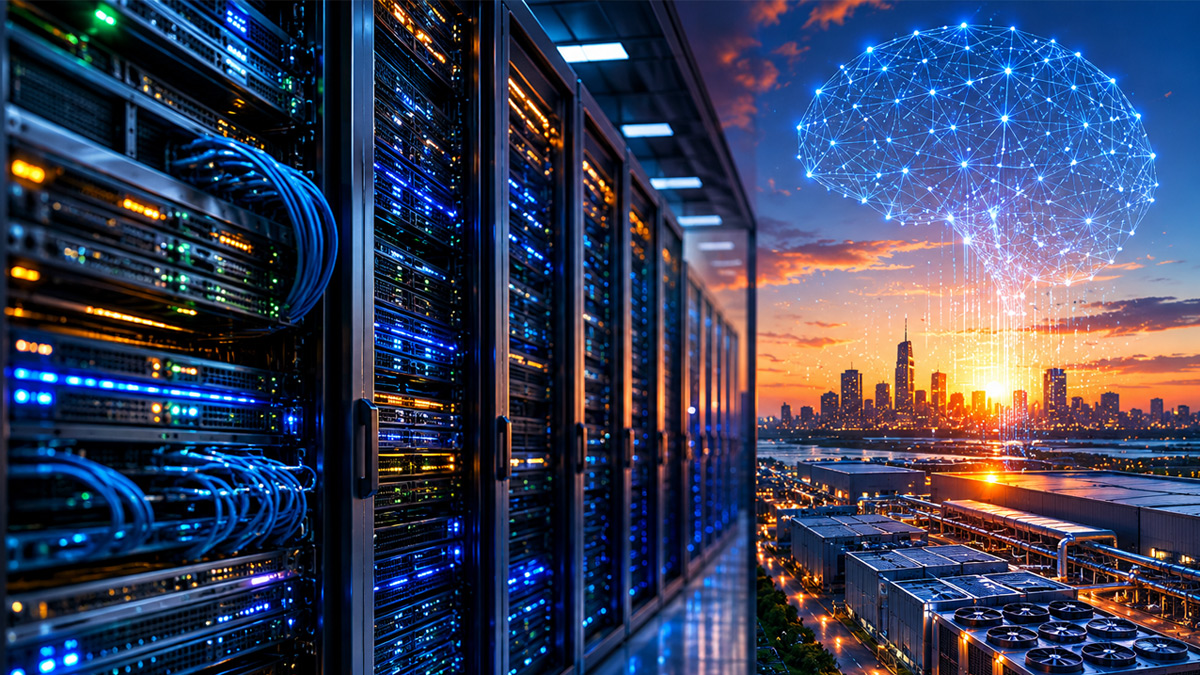
Every breakthrough AI model requires enormous amounts of computing power. Training a frontier model today demands tens of thousands and increasingly hundreds of thousands of advanced graphics processors working in tandem. Those chips need servers, networking systems, storage infrastructure, cooling technology and vast amounts of electricity.
In other words, they need industrial-scale infrastructure.
The AI boom has triggered a global scramble for precisely those resources. Technology companies are reportedly locking in long-term hardware agreements years in advance. Demand for specialised memory, servers and networking equipment has surged. Supply chains are being stretched as cloud providers and AI firms race to secure the components needed for the next generation of AI systems.
What was once a software competition is rapidly turning into a battle for physical capacity.
That shift is perhaps most visible in the rise of what industry executives now call “AI factories” – massive data-centre complexes designed not merely to store information but to manufacture intelligence itself.
These facilities are becoming the steel mills of the digital age.
Among the most ambitious projects is xAI’s Colossus supercomputer initiative, which has become a symbol of the industry’s escalating appetite for compute power. Building such systems requires more than chips from NVIDIA. It requires thousands of server racks, sophisticated networking architecture and infrastructure capable of operating at unprecedented scale.
This is where Dell enters the story.
The company has aggressively repositioned itself as an AI infrastructure provider through its AI Factory strategy, supplying the hardware backbone that connects advanced processors with real-world deployment. Rather than competing with AI developers, Dell has positioned itself as the company helping them build.
And business is booming.
As enterprises move beyond AI experimentation and begin deploying large-scale generative AI systems, demand for AI-optimised servers has exploded. Companies that once purchased traditional data-centre equipment are now seeking specialised infrastructure capable of handling complex AI workloads.
For Dell, the timing could not be better.
The company’s growing role highlights a broader truth about the AI revolution: the biggest opportunities may no longer lie in the applications people interact with every day, but in the machinery hidden behind them.
Investors have spent years debating which AI model will dominate.
The market may have been asking the wrong question.
The more important question is who supplies the picks and shovels during a gold rush.
History offers a useful parallel. During the California Gold Rush, many prospectors went home empty-handed. The businesses that consistently made money were often the ones selling tools, transport and infrastructure.
The AI boom appears to be following a similar pattern.
While OpenAI, Google, Anthropic and xAI compete for algorithmic supremacy, a parallel class of winners is emerging. These are the companies supplying the servers, cooling systems, networking equipment, power infrastructure and data-centre architecture that every AI company requires.
In many ways, compute has become the new oil, and data centres have become the refineries.
This transformation carries implications far beyond Silicon Valley.
As AI becomes embedded into healthcare, finance, manufacturing, defence and scientific research, nations and corporations alike will need access to enormous computing resources. The ability to secure infrastructure may become just as strategically important as the ability to build software.
The future of AI, therefore, may not be decided solely by better algorithms. It may be decided by who can build the roads, factories and power plants of the intelligence age. And right now, companies like Dell are finding themselves at the centre of that construction boom.
The AI revolution is still being written. But one thing is becoming increasingly clear: the winners will not only be the companies creating artificial intelligence. They will also be the companies building the world it runs on.