
MUMBAI: The office to-do list may have just found its newest colleague. OpenAI has unveiled ChatGPT Work, a new AI agent designed to move beyond answering questions to completing complex, multi-step tasks across apps, files and workflows, marking one of the company’s biggest pushes yet into workplace productivity.
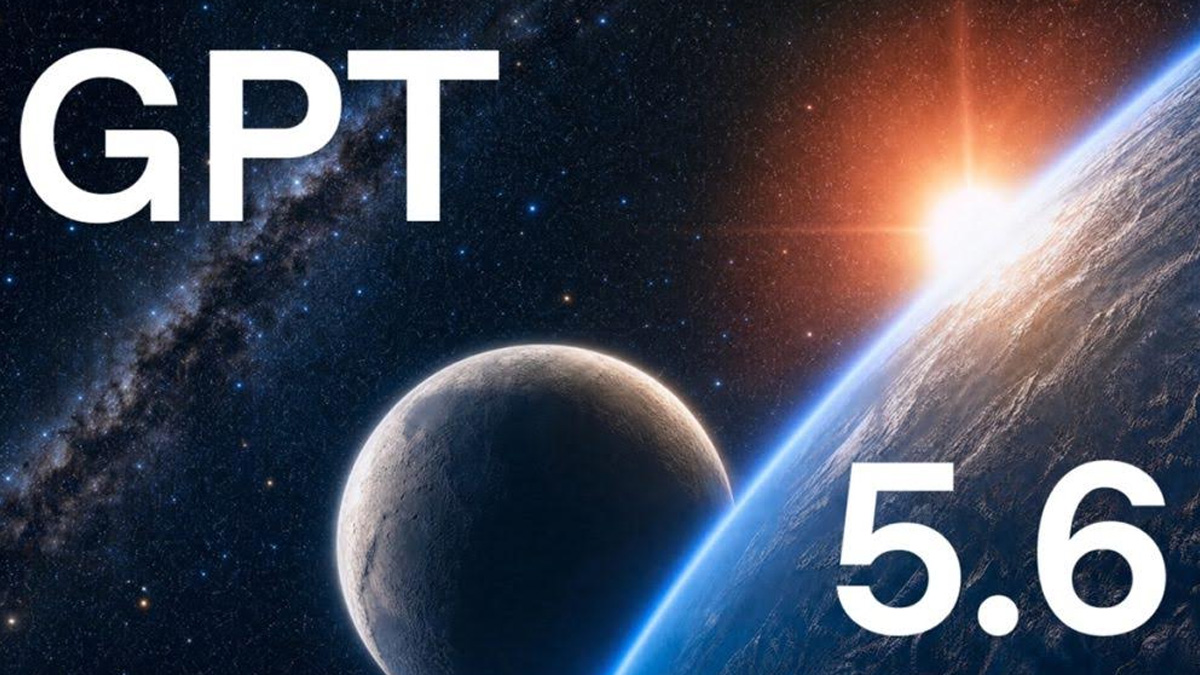
The launch is powered by GPT-5.6, OpenAI’s latest frontier model family comprising Sol, Terra and Luna, each built for different workloads ranging from high-performance reasoning to cost-efficient enterprise deployments.
Unlike conventional chatbots, ChatGPT Work is designed to stay with projects for hours, gathering context from connected applications and producing finished outputs such as documents, spreadsheets, presentations and web applications. The service integrates capabilities previously available through Codex and is now being brought together with ChatGPT in a redesigned desktop experience.
OpenAI’s new desktop application combines Chat, Work and Codex into a single interface. While Chat continues to handle everyday queries, Work is aimed at complex business workflows, and Codex remains focused on software development and technical tasks.
The company has also introduced a unified plugins directory that connects ChatGPT with workplace tools including Slack, Gmail, Google Drive, calendars and customer relationship management (CRM) platforms. New Scheduled Tasks allow recurring work to run automatically, while the desktop application adds an in-app browser and Computer Use capabilities to interact with websites and local applications.
At the heart of the launch is GPT-5.6 Sol, OpenAI’s flagship model, which the company says delivers stronger reasoning, coding and scientific performance while requiring fewer tokens and lowering computational costs. OpenAI said the model improves its ability to tackle multi-step reasoning, generate documents that follow templates and reference existing files, while producing higher-quality presentations, spreadsheets and reports.
The rollout also introduces Ultra Mode, OpenAI’s highest-performance setting, which coordinates multiple AI agents in parallel to accelerate complex professional workflows.
According to OpenAI’s benchmark results, GPT-5.6 Sol scored 53.6 on Agents’ Last Exam, outperforming Claude Fable 5 (adaptive) by 13.1 points. At medium reasoning, it exceeded Claude by 11.4 points while operating at roughly one-quarter of the estimated cost. The company also said Terra and Luna outperformed the competing model at approximately one-sixteenth of the estimated cost.
On the Artificial Analysis Coding Agent Index, Sol achieved a new industry-leading score of 80.0, surpassing Claude Fable 5 by 2.8 points while using less than half the output tokens, taking less than half the execution time and costing roughly one-third less.
OpenAI also highlighted improvements in cybersecurity performance. On ExploitBench, the model scored 73.5 per cent, compared with 47.9 per cent for GPT-5.5 using a comparable output-token budget.
For coding-agent tasks, the company said GPT-5.6 Sol with maximum reasoning outperformed Claude Fable 5 while using 54 per cent fewer output tokens. Terra and Luna also exceeded competing models at approximately one-fifth of the estimated API cost and around one-third of the execution time.
The rollout has begun globally. The redesigned desktop app for Mac and Windows is being made available to Free, Plus, Pro, Business and Enterprise users. ChatGPT Work is initially rolling out on web and mobile for Pro, Enterprise and Edu subscribers, with Plus and Business users expected to receive access over the following days.
Reflecting on the launch, Kiran Mani, who recently joined OpenAI to lead the company’s efforts across Asia Pacific and Japan, said the focus is shifting from AI that simply answers questions to AI capable of delivering finished work. He noted that businesses across the region are increasingly looking beyond experimentation towards practical deployments that create measurable value, with ChatGPT Work designed to support that transition.