

MUMBAI: The AI race is getting a little more chipper, with OpenAI and Samsung Electronics moving closer to joint work on the research and production of next-generation AI chips.
Harrison Kim, general manager of OpenAI Korea, disclosed the development at a press conference in Seoul on September 9, saying joint research and production of next-generation chips was among the areas where the two companies had made the most progress. He did not provide details on the chips or Samsung’s specific role. Samsung did not confirm the customer-related information.
The development comes as OpenAI steps further into custom silicon while the AI boom continues to drive demand for computing power and advanced memory. The ChatGPT maker is seeking greater control over the hardware infrastructure supporting its increasingly capable AI systems.
OpenAI began its custom-chip push in June when it unveiled its first custom AI chip, Jalapeno, developed with semiconductor giant Broadcom. The chip was designed by OpenAI engineers for AI inference — the processing required to generate responses for applications such as ChatGPT. The chips are expected to be manufactured by Taiwan Semiconductor Manufacturing Company (TSMC).
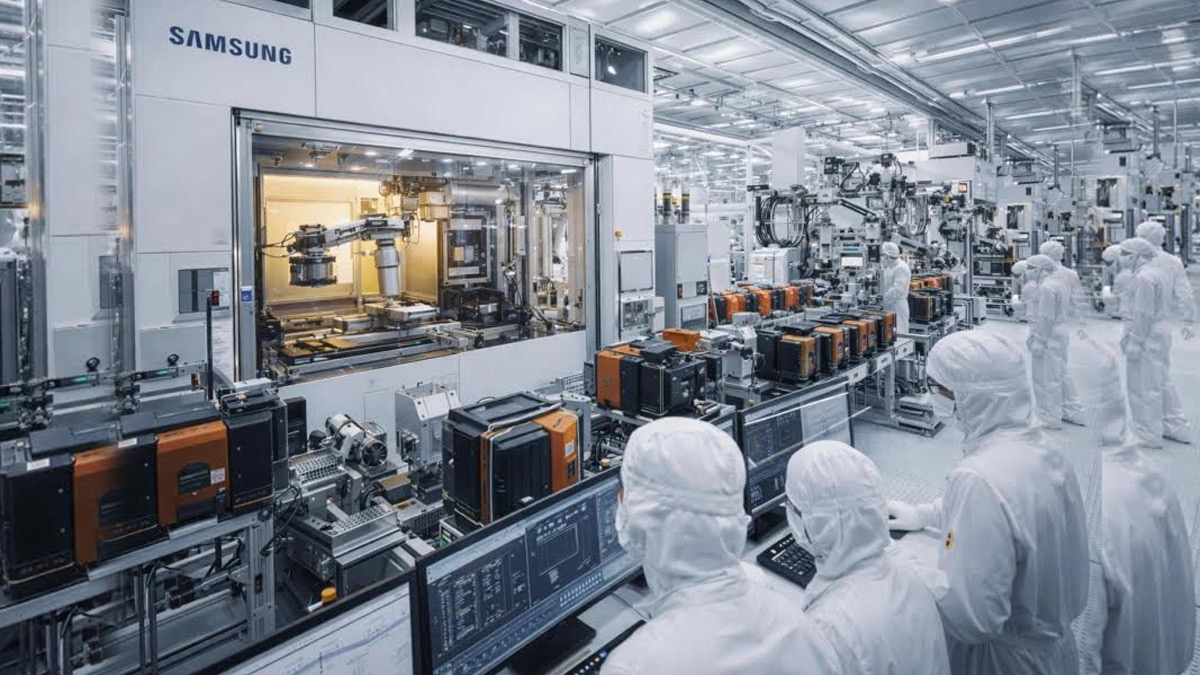
The Samsung collaboration could extend that hardware strategy deeper into the semiconductor supply chain, although OpenAI has not disclosed whether Samsung would manufacture the chips, supply components or contribute to other parts of their development.
The relationship is not starting from scratch. Last year, Samsung Electronics and SK Hynix signed letters of intent to supply memory chips for OpenAI’s Stargate data-centre project. With AI systems demanding increasing computing power and faster processing, advanced memory has become an increasingly important piece of the infrastructure puzzle.
Kim said cooperation with South Korean semiconductor companies was therefore a priority for OpenAI’s local operation.
The Samsung relationship also goes beyond silicon. Kim said Samsung Electronics is among the largest-scale deployments of ChatGPT globally, with employees in South Korea and other markets using the AI assistant across research and development, marketing and sales.
Samsung has been widening its internal generative AI footprint as well. In June, it said employees in its Device eXperience division — which covers businesses including smartphones, televisions and home appliances — could use ChatGPT, Google Gemini and Anthropic’s Claude.
That shift reflects a broader move from employees experimenting with AI individually to companies deploying multiple AI tools across entire functions and divisions.
South Korea is also emerging as an important market for OpenAI. The company said the number of ChatGPT Enterprise users at South Korean companies and institutions had increased about 28-fold by the end of August from a year earlier, with businesses extending AI use into legal, sales, finance, marketing and operations.
OpenAI also said South Korea had the largest number of paying ChatGPT subscribers outside the US as of late 2025, although it did not disclose the absolute number.
The company expects adoption to accelerate following the September 4 launch of GPT-6 Astra, which it says brings improvements in computer use, professional work, science, coding and cybersecurity.
Taken together, the Samsung relationship gives OpenAI connections across several layers of the AI ecosystem — from enterprise users to memory suppliers and now potential chip research and production.
For OpenAI, the move comes as controlling access to computing becomes almost as important as developing the models themselves. Its work involving Broadcom, TSMC, Samsung and South Korean memory-chip makers underlines a simple reality of the AI boom: smarter models need increasingly powerful silicon underneath them.