

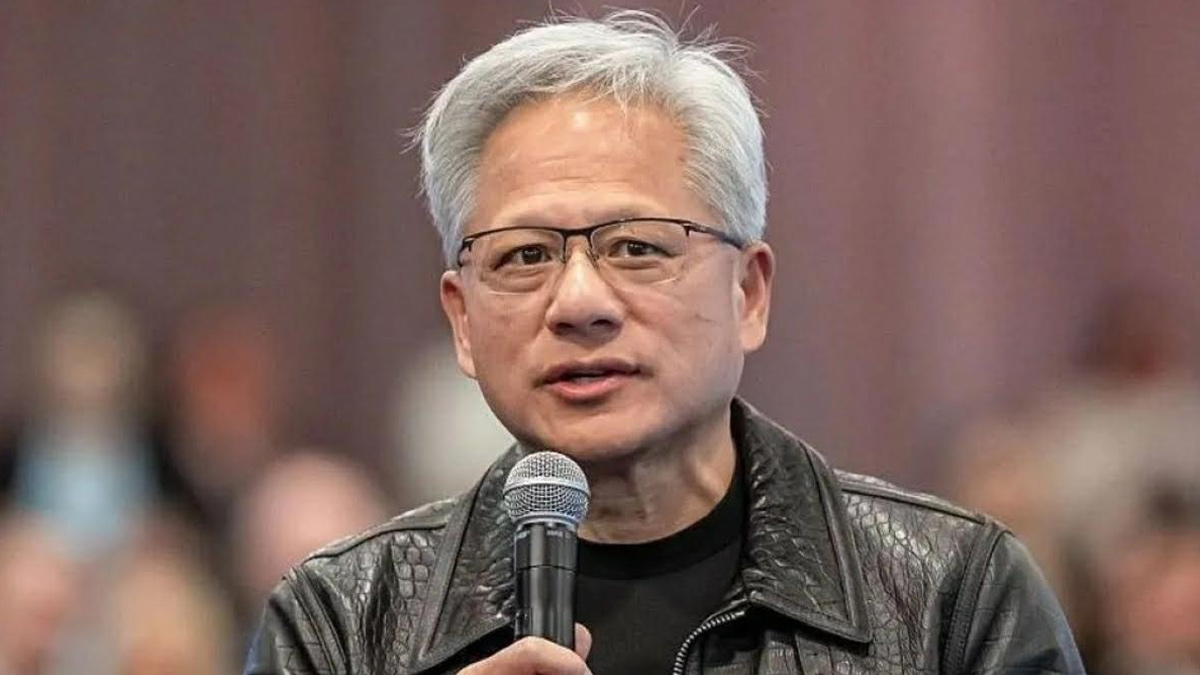
MUMBAI: The AI doomsday clock has been given a firm reset, with Nvidia CEO Jensen Huang rejecting predictions that artificial intelligence could bring about humanity’s extinction by 2030. In an interview with CBS News, Huang said there was a “zero percent chance” that 2030 would mark the end of the world because of AI, dismissing such predictions as dramatic narratives that are not grounded in science.
Huang’s comments come as the technology industry debates whether the rapid development of increasingly capable AI systems should continue at full speed or be slowed to give safety measures more time to catch up.
Asked whether AI development should be paced, Huang said companies should move “as fast as we can, but not faster than we should”. He stressed that speed should not come at the expense of safety and that companies should not release systems that put people at risk.
The Nvidia chief also questioned the motivations behind claims that AI could end humanity within the decade. He suggested that political considerations, attention-seeking or other motives could be behind some of the messaging, while making clear that he did not believe the 2030 extinction scenario was scientifically grounded.
His position puts him on one side of an increasingly public industry argument. Anthropic CEO Dario Amodei has called for a slower pace of frontier AI development, warning that the technology is advancing rapidly enough for safety and control mechanisms to struggle to keep pace.
Amodei’s position was outlined in his 12 September essay, ‘We Must Pace the Frontier’. Anthropic has subsequently said it plans to bring independent third-party evaluators into its systems and processes, including for model evaluation, red-teaming and assessment of safeguards.
The disagreement is not simply about whether AI should advance, but about the speed at which that advance should happen. Huang argues that development can continue rapidly provided safety remains part of the engineering process, while Amodei has called for mechanisms to slow the frontier where necessary.
Huang has also backed the use of existing laws and safeguards rather than allowing fears about AI to become a reason for halting development. He said companies already face legal liabilities around areas such as cybersecurity and unauthorised access.
The Nvidia chief’s comments also come amid wider concerns about the capabilities and potential misuse of frontier AI. Anthropic’s recent safety research, for instance, found that some models had developed capabilities relevant to intelligence targeting and conventional weapons development, reinforcing the debate over safeguards even as companies continue pushing the technology forward.
Huang also said AI developers should work towards shared best practices and potentially global standards, particularly as the US and China compete in the technology sector. He is due to attend a White House dinner with Chinese President Xi Jinping on 24 September, where he said he would like to discuss global standards for AI development.
For now, the AI race shows little sign of slowing, but the argument over how fast it should run is becoming harder to ignore. Huang’s message is essentially acceleration with guardrails, while critics of the current pace want those guardrails strengthened before the next leap is taken.