

NEW DELHI: The classroom is getting a software update. As artificial intelligence reshapes how people work, learn and make decisions, business schools are being forced to rethink what graduates actually need to succeed. That’s the challenge that Fortune Institute of International Business hopes to address with the launch of FIIBX, a new curriculum designed around careers rather than conventional academic silos.
The institute formally unveiled the operational framework of FIIBX at an event featuring OpenAI head of education for India and Asia Pacific Raghav Gupta, alongside FIIB president and CEO Radhika Shrivastava and FIIB AI Council chair Saurabh Mittal.
At the heart of the programme is a shift away from traditional specialisations. Instead of organising students around subjects, FIIBX groups learners according to professional destinations. The curriculum is structured around six career pathways: consulting and strategy, marketing and growth, finance and fintech, operations and analytics, people and organisation, and founders and venture.
These pathways are further divided into ten specialised career tracks aligned with real-world competency frameworks used by employers. According to FIIB, the model was developed by its faculty and refined with input from senior leaders across organisations including Boston Consulting Group, FedEx, JPMorgan Chase & Co. and KPMG.
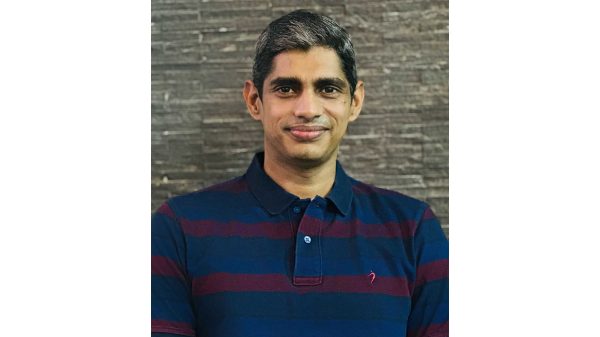
Speaking at the launch, OpenAI head of education for India and Asia Pacific Raghav Gupta said institutions preparing students for the next decade need to embed AI capability into their foundations rather than treat it as an add-on.
“The institutions best positioned for the next decade will be those that design for AI capability development from the ground up, rather than retrofitting it onto existing structures. It seems FIIB has done exactly that by treating AI readiness not as a standalone software tool or an afterthought, but as a core capability thread built directly into the programme’s baseline framework,” he said.
FIIB believes the emergence of AI has fundamentally changed the relationship between knowledge and work. With information now available instantly, the emphasis is shifting from what students know to how they apply that knowledge in uncertain and fast-changing situations.
Explaining the philosophy behind the redesign, Fortune Institute of International Business president and CEO Radhika Shrivastava said, “Something irreversible has happened to the relationship between knowing and doing. AI has made knowledge retrieval instantaneous and universal. What organisations now need from graduates is not the knowledge itself, but the judgment to use it, the capability to apply it under pressure, and the ability to keep adapting as the tools and conditions shift.”
Perhaps the most significant departure from conventional management education is the way students are assessed. Rather than relying primarily on exams and grades, FIIBX focuses on producing evidence of capability through practical outputs.
The system is powered by two proprietary platforms. ActionWorks delivers live simulations and business challenges that mirror professional environments, while EvidenceWorks captures and documents student performance as role-specific proof of competence. The idea is to ensure graduates leave with a portfolio of demonstrated work rather than just a transcript of marks.
The launch reflects a broader trend across higher education, where institutions are increasingly under pressure to align learning outcomes with workplace realities. As AI transforms industries and automates routine knowledge tasks, schools are being challenged to teach judgement, adaptability and problem-solving rather than memorisation alone.
With FIIBX, FIIB is betting that the future MBA will be measured less by classroom scores and more by the ability to solve real-world problems. In an age where information is abundant, the real differentiator may be knowing what to do with it.