
MUMBAI: ChatGPT is learning a new way to make the conversation pay. OpenAI’s advertising business has reached a $1 billion annualised revenue run rate in less than 200 days, marking a rapid rise for a programme that began as an early-stage advertising test.
ChatGPT Ads is now used by tens of thousands of advertisers across more than 40 countries, with OpenAI expanding self-serve buying through Ads Manager to India, Europe, the Middle East and North Africa from September 1.
The move gives advertisers a new route to reach consumers while they are researching products, comparing options or looking for solutions — moments OpenAI describes as “decision moments”.
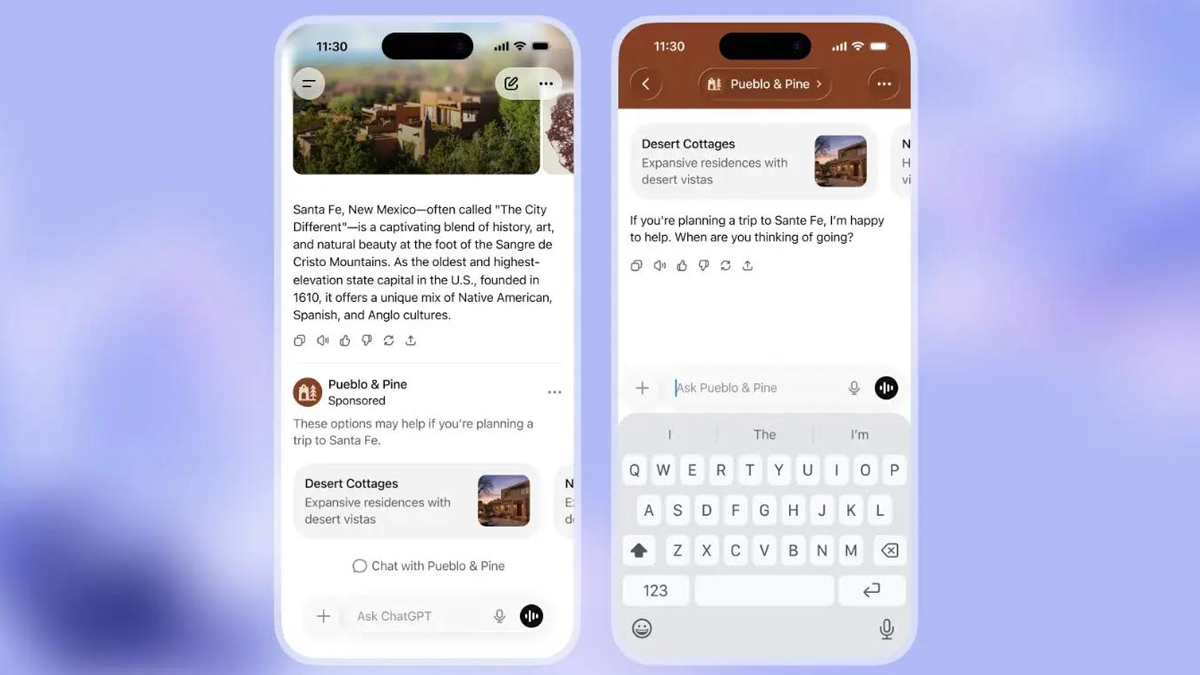
ChatGPT Ads takes a different route to conventional search advertising. Instead of relying only on a typed search query, conversations can reveal a user’s goals, preferences and constraints in greater detail.
OpenAI says its advertising system uses the context of the current conversation to determine relevant ads and, depending on the user’s country and settings, may also draw on selected signals from a user’s broader ChatGPT experience.
For marketers, that potentially shifts advertising further up the decision-making funnel — from simply responding to what consumers search for to appearing while they are still weighing their options.
India is particularly significant to the expansion as OpenAI continues to build its presence in one of ChatGPT’s largest markets. The availability of Ads Manager also opens the platform to small businesses and startups, rather than leaving access primarily to large advertisers and agencies.
OpenAI said small and medium-sized businesses already account for a material share of its advertising business following the launch of Ads Manager in May.
OpenAI has expanded its advertising infrastructure to more than 50 technology and measurement partners.
Since testing began in February 2026, the company has introduced cost-per-click and outcome-optimised bidding, geographic targeting, custom audiences, product feeds and conversion measurement through its Pixel and Conversions API.
OpenAI said CPC and outcome-optimised bidding now account for the majority of campaigns.
Early advertiser results have also been cited as evidence of traction. One e-commerce advertiser generated a three-times return on ad spend over 28 days, while a technology partner reported that more than 80 per cent of ad-driven ChatGPT traffic came from new customers.
As advertising becomes a bigger part of the business, OpenAI is also stressing the separation between commercial messages and ChatGPT’s responses.
Ads are labelled and displayed separately from answers, while advertisers do not receive access to users’ private conversations. Users can control ad personalisation and clear advertising data, according to the company.
OpenAI also says advertising does not influence, rank or alter ChatGPT’s answers. Ads are not displayed to accounts identified as belonging to users under 18, with additional safeguards around sensitive and brand-unsafe contexts.
The advertising push comes alongside OpenAI’s existing consumer subscription, enterprise and API businesses, giving the company multiple revenue streams as it invests heavily in the infrastructure needed to operate AI at scale.
The next phase will see ChatGPT Ads expand into additional markets, with more formats, objectives, buying options and measurement tools in development. OpenAI also plans to explore more native ways for businesses to interact with consumers inside ChatGPT.
For advertisers, the bigger shift may be less about another place to buy media and more about a new kind of advertising environment, one where the audience is already asking, comparing and deciding.
With a $1 billion annualised run rate achieved in under 200 days, OpenAI has given that experiment a very sizeable commercial answer.