
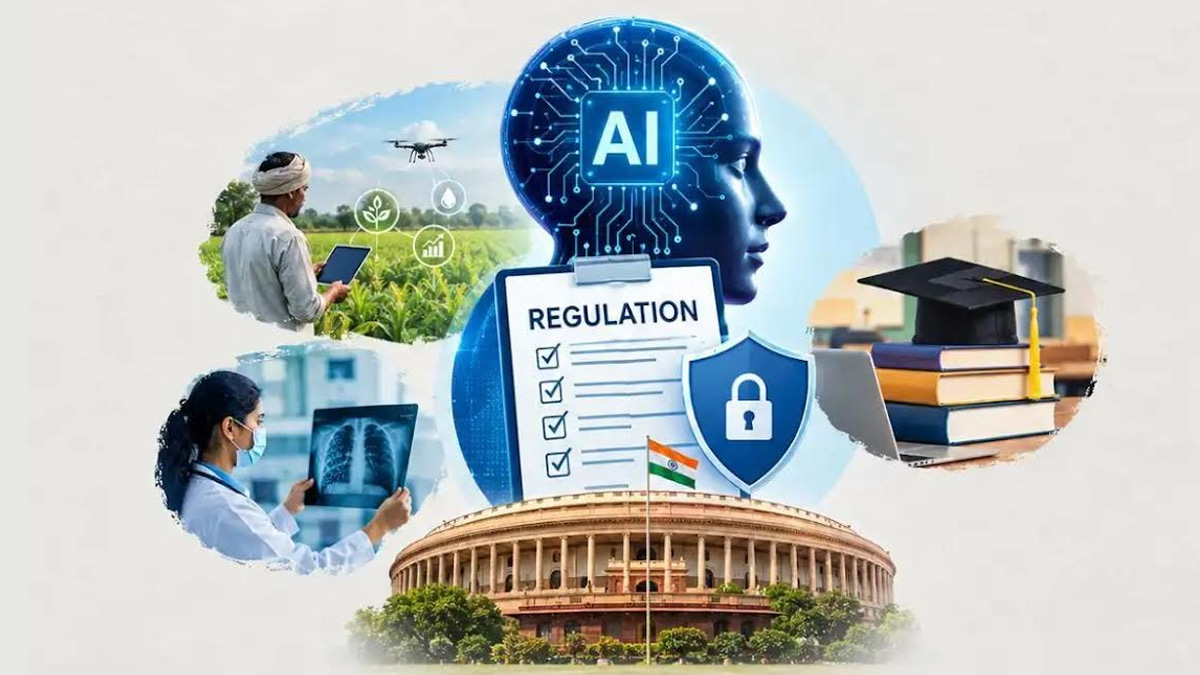
MUMBAI: Artificial intelligence may be getting smarter by the day, but the government wants to make sure its risks do not get a head start on the rules. The Centre is close to finalising its consultation paper on AI regulation and is expected to invite public feedback on proposed safeguards, according to a Moneycontrol report citing people familiar with the matter.
The document is expected to examine some of the most pressing questions surrounding the technology, including AI safety, the spread of deepfakes and the potential psychological impact of AI on users. It will also look at the skills required to prepare the workforce for an AI-driven economy and ways to ensure that the benefits of the technology reach a wider section of society.
A senior government official told Moneycontrol that the government had studied regulatory frameworks adopted internationally and held discussions with several stakeholders, including academics, while preparing the paper. The consultation is expected to bring these inputs into a wider public discussion, with citizens, businesses and AI users getting an opportunity to respond to the proposed approach.
The exercise is significant as India attempts to balance the opportunities offered by AI with concerns over its misuse. From manipulated videos and synthetic audio to the influence of AI-powered systems on users, the technology has created questions that extend beyond the development of new tools. The government is now looking to examine how safeguards, accountability and public awareness could keep pace with its adoption.
Union Electronics and Information Technology Minister Ashwini Vaishnaw first announced the proposed consultation on 8 October. He said the government intended to publish the paper within a month, identifying AI safety as one of its key areas of focus.
On 23 October, Vaishnaw reiterated that the document would be released in the coming weeks. He also said the government would seek responses from citizens, businesses and people using AI, indicating that the exercise would extend beyond industry stakeholders and policy experts.
The minister had also suggested that the scale of emerging AI-related risks warranted consideration of legislative measures and additional regulations. This points to a wider examination of whether existing laws are sufficient to address the challenges created by increasingly sophisticated AI systems.
The consultation paper is expected to provide a platform for examining these questions before the government decides on the way forward. However, the specific regulatory measures being considered have not yet been detailed in the information available.
The proposed consultation builds on the India AI Governance Guidelines released in November 2025, which laid out a framework for the development and deployment of AI in the country.
The guidelines identified seven guiding principles for AI governance. These included maintaining human oversight wherever feasible, ensuring accountability in proportion to the potential harm caused by AI systems, and improving transparency for users and regulators.
The framework sought to establish a broad approach to responsible AI development rather than treating every emerging risk as a completely new regulatory issue. The committee that drafted the guidelines observed that several AI-related concerns could be addressed through existing legislation.
However, it also recommended examining gaps in the current legal framework, particularly in areas where the use of AI could create new forms of liability or complicate the enforcement of existing rights.
Three areas received particular attention: accountability when AI systems cause harm, the application of data protection requirements to AI development, and copyright issues involving material used to train AI models.
These questions are becoming increasingly relevant as AI systems rely on large volumes of data and content. The use of copyrighted material in training models, the handling of personal information and the question of who should be held responsible when an AI-generated output causes harm are among the issues that policymakers may need to address.
The guidelines also highlighted the need for uniform mechanisms to establish the origin and authenticity of digital content, particularly as deepfakes become more difficult to distinguish from genuine photographs, videos and audio recordings.
The concern is not limited to fabricated celebrity videos or misleading social media posts. Synthetic content can also complicate the verification of public statements, news footage and other material circulating online.
Establishing where digital content originated and whether it has been altered could therefore become an important part of the country’s AI governance approach. The proposed consultation is expected to examine safeguards against deepfakes alongside wider questions of AI safety and the psychological impact of the technology on users.
The inclusion of psychological effects also broadens the discussion beyond the technical risks of AI. It brings into focus how people interact with AI systems and how those interactions could affect users, an area that the government is expected to examine through the consultation.
The November 2025 guidelines also outlined an institutional structure to support AI policymaking and oversight.
They proposed setting up an AI Governance Group to coordinate policymaking across government departments, supported by a Technology and Policy Expert Committee. The framework also recommended establishing an AI Safety Institute to facilitate research and testing.
Together, these proposed bodies were intended to provide institutional support for examining AI-related risks, coordinating government responses and building expertise around the technology.
The consultation paper now being finalised could add another layer to this process by inviting public and industry feedback on the safeguards required. The government has not yet disclosed a final timeline for the paper’s release or specified what legislative changes, if any, may follow the consultation.
For India, the policy challenge is to create safeguards without losing sight of the technology’s potential economic and social benefits. The upcoming consultation will offer an opportunity to weigh those competing priorities, particularly as AI adoption expands across businesses, workplaces and everyday digital services.