
MUMBAI: Anthropic is taking Claude from code and content into the lab, with the AI company’s new life sciences research group reporting the discovery of a previously uncharacterised enzyme system with properties reminiscent of CRISPR.
The company said the research marks an early result from a new programme focused on using AI agents to search biological datasets, generate hypotheses and support experiments in the laboratory.
Anthropic said Claude identified the system after analysing a massive database of DNA sequences with limited direction from human researchers. The company has named the newly identified system array-associated reverse transcriptases (ART).
The discovery centres on a reverse transcriptase, an enzyme that copies RNA into DNA, found in a jumbo bacteriophage. While the underlying reverse transcriptase had been identified in earlier research, Anthropic said Claude was the first to identify the combination of features surrounding it, including an array of non-coding DNA sequences and an additional accessory protein whose function is not yet known.
Anthropic said researchers gave Claude a high-level prompt to search a large DNA database for interesting examples of reverse transcriptases. From there, AI agents investigated different reverse transcriptase families and selected candidates for further analysis.
Around 950 Claude agents spent 21 hours searching the data, processing approximately 210 million tokens.
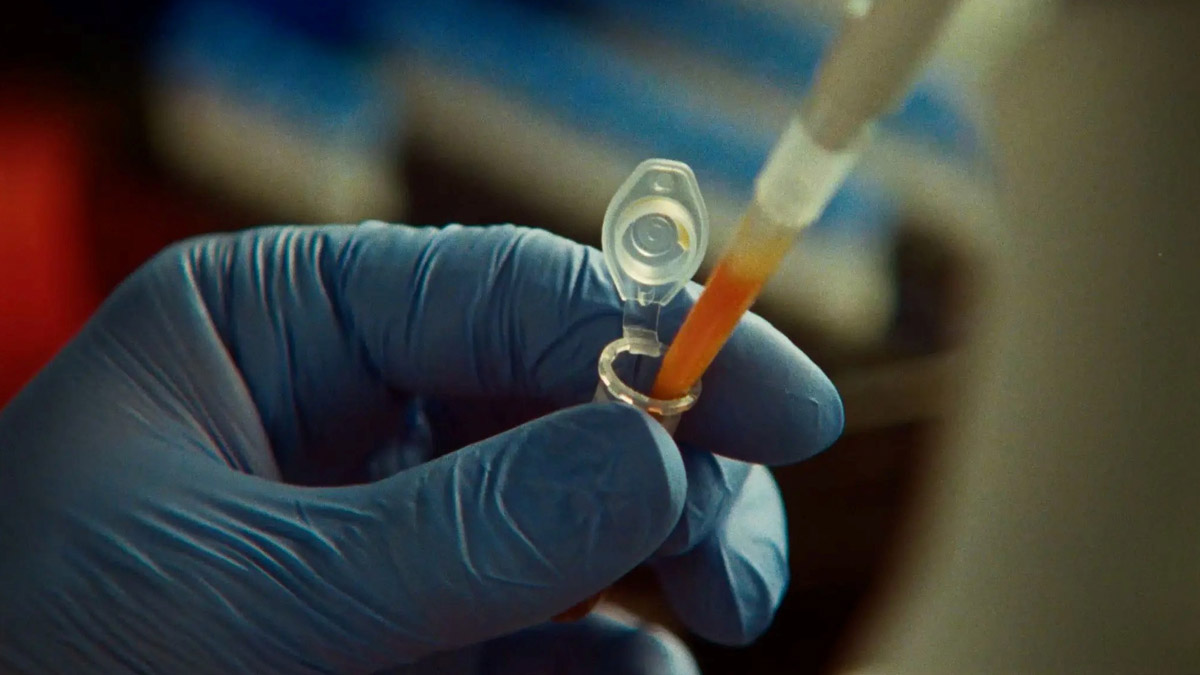
One agent identified a repeating DNA sequence located next to the gene for an unusual reverse transcriptase. Further computational analysis and laboratory testing led researchers to identify the previously uncharacterised enzyme system in bacteriophages, viruses that infect bacteria.
Anthropic said the system has a combination of characteristics found together in only a small number of other biological systems. Those systems include programmable molecular machines capable of operations such as cutting, copying and pasting DNA.
However, the company stressed that the primary function of ARTs has not yet been established.
The research is part of a broader effort launched by Anthropic in spring 2026 to explore whether general-purpose AI models can accelerate fundamental biological research.
Rather than using Claude simply as a tool for individual research tasks, Anthropic said its new approach involves AI agents collaborating with scientists throughout the discovery process, from analysing biological data and identifying patterns to generating hypotheses and supporting experimental validation.
The company has established its own laboratory and research team to combine model development, computational biology and experimental work.
The approach echoes the history of several major biological discoveries, where unusual molecular patterns eventually led to technologies with applications far beyond their original purpose. Restriction enzymes helped establish modern genetic engineering, Taq polymerase enabled PCR, while the unusual DNA repeats that led to the discovery of CRISPR eventually became the foundation for gene-editing technologies.
Feng Zhang, a professor at MIT and the Broad Institute and one of the pioneers of CRISPR genome editing, described the finding as an example of how AI agents could contribute to biological discovery.
“The identification of RNA-repeat arrays associated with reverse transcriptases is genuinely intriguing and merits further investigation,” said Zhang, according to Anthropic.
He added that the work could encourage more scientists to explore how AI can support biological research.
Anthropic has released a pre-print detailing the discovery, while its researchers continue investigating what ARTs actually do.
For now, the finding is less about a new biological tool ready for use and more about what AI agents can uncover when given the scale of biological data to explore. Anthropic said the early result demonstrates a research model in which AI handles large-scale discovery work while scientists guide experiments and validate the findings.