

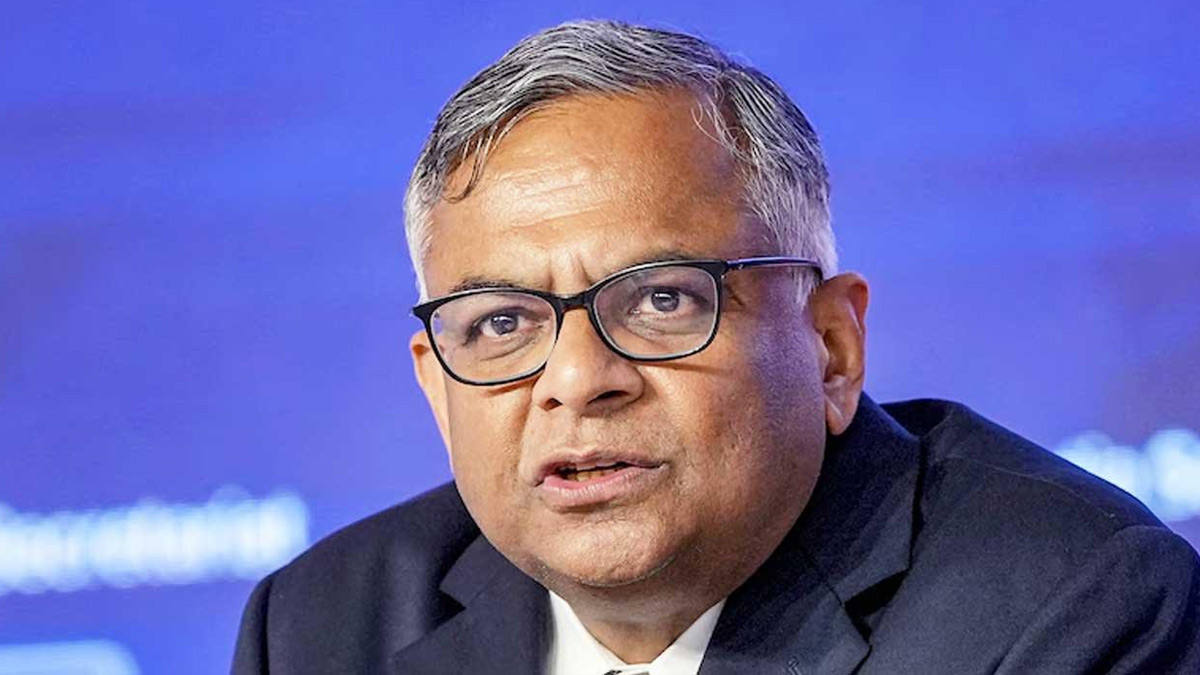
MUMBAI: The robots may be learning to code, but TCS believes they are more likely to create work than take it away. At a time when artificial intelligence is triggering existential debates across boardrooms and technology companies, Tata Consultancy Services (TCS) Chairman N Chandrasekaran has offered a decidedly optimistic view: AI is not a threat to the IT services industry, it is its next big growth engine.
Addressing shareholders at TCS’ 31st Annual General Meeting on June 9, Chandrasekaran pushed back against growing concerns that advances in generative and agentic AI could undermine the labour-intensive business model that has powered the global IT services sector for decades.
The anxiety is understandable. AI systems are becoming increasingly capable of writing code, testing software, automating workflows and even managing parts of technology operations. To many observers, that sounds less like assistance and more like replacement.
Chandrasekaran, however, argued that the narrative misses the bigger picture.
According to him, AI should be viewed not as a standalone technology but as a foundational layer of infrastructure similar to the internet, cloud computing or mobile connectivity that will unlock entirely new waves of enterprise spending.
As intelligence becomes cheaper, faster and more accessible, businesses are expected to invest more aggressively in digital transformation, modernisation and automation, creating fresh opportunities for technology service providers rather than shrinking them.
History, he suggested, offers a useful lesson.
Technological breakthroughs that improve efficiency have often expanded markets instead of contracting them. From industrial machinery to cloud computing, each major innovation has ultimately generated new demand, new services and new business models. Chandrasekaran believes AI is likely to follow the same trajectory.
The numbers behind that opportunity are substantial.
The global enterprise IT market, currently estimated at around $1.6 trillion, could expand to nearly $3 trillion over the next decade as organisations ramp up investments to support AI-led transformation initiatives, he said.
For TCS, the opportunity extends far beyond deploying chatbots or automating routine tasks.
Chandrasekaran identified five major growth areas emerging from the AI wave: the modernisation of legacy technology infrastructure, AI-driven business transformation, governance and management of AI systems, sovereign AI infrastructure and physical AI applications across sectors such as manufacturing, logistics and agriculture.
The comments also offered a glimpse into how rapidly AI is becoming embedded within TCS itself.
The company recorded an annualised AI revenue run-rate of $2.4 billion in the fourth quarter of FY26, while its AI business grew at a compounded quarterly rate of 22.4 per cent, signalling accelerating enterprise demand.
Perhaps the most striking prediction came when Chandrasekaran suggested that TCS could have as many AI agents as human employees within the next three years.
The statement underscores how dramatically the workplace could evolve, with software agents increasingly working alongside employees to handle routine processes, analyse data and support decision-making.
Yet despite AI’s growing capabilities, Chandrasekaran believes established IT services firms still possess a critical advantage.
In the race to deploy enterprise AI, he argued, the most valuable assets will not be large language models or computing power alone, but deep industry expertise, contextual understanding and trusted customer relationships.
“In enterprise AI, the scarcest resource will not be the model. It will be context and trust,” he said.
The remarks arrive at a pivotal moment for India’s technology sector, which has faced persistent questions about whether AI could reduce demand for traditional outsourcing services. Instead, TCS is positioning itself at the centre of what it sees as the industry’s next expansion cycle.
If Chandrasekaran’s thesis proves correct, AI may not be replacing the IT services industry. It may be giving it a much larger stage on which to perform.