
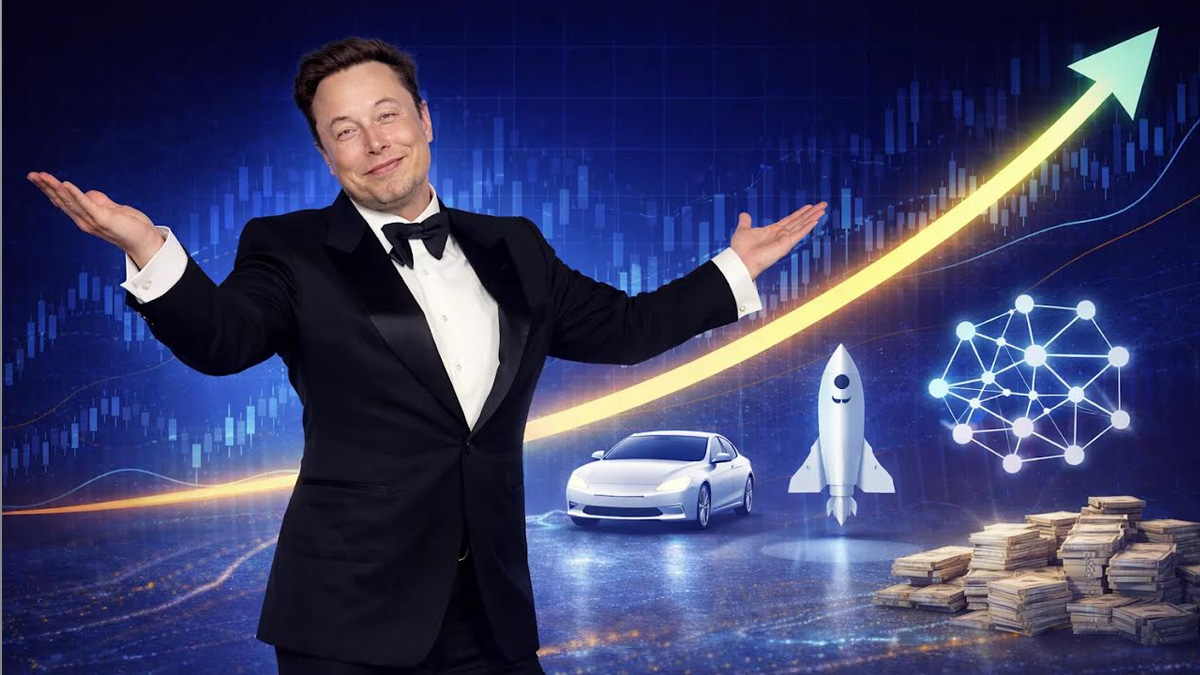
MUMBAI: What if the biggest thing money could buy in the future is nothing at all? Elon Musk believes that as artificial intelligence (AI), robotics and space exploration advance, cash could gradually lose its place at the centre of the economy, leaving humanity to rethink not just how it earns a living, but why it works in the first place.
The Tesla and SpaceX chief executive has predicted a future in which conventional currencies may no longer play their familiar role, as technology makes goods and services increasingly abundant. According to a report by Business Insider, Musk shared these views during a conversation with his biographer Walter Isaacson on The Builders podcast. The interview was recorded in early August and released on Tuesday.
Musk’s argument rests on a sweeping technological shift. If AI systems and robots become capable of performing virtually every task better than humans, the traditional link between employment, income and access to necessities could weaken. In such a world, people might no longer need to work simply to afford the basics, although how such an economy would operate remains an open question.
The idea becomes even more ambitious when Musk looks beyond Earth. He suggested that an economy spread across multiple planets could change the way society measures value, potentially making energy and physical resources more important than money itself. Rather than treating currency as the universal yardstick of economic activity, a future civilisation might focus more directly on the resources needed to produce goods, power machines and sustain life across worlds.
It is a vision in which the ultimate currency could be closer to electricity than a bank balance. But Musk’s prediction is not simply about replacing cash with another unit of exchange. It points towards a possible transformation in how production, scarcity and human needs are understood if technological progress makes many goods and services far easier to produce.
That does not mean Musk expects people to spend their days doing nothing. Instead, he suggested that humans could find purpose in activities they choose for themselves, such as growing their own food or creating art. If machines take over much of the work currently performed by people, personal fulfilment could become less about earning a salary and more about deciding how to spend time.
The distinction is important. A future with abundant goods would not automatically answer questions about purpose, access to resources or how society distributes the benefits of automation. Musk’s comments describe a possible destination shaped by technological advances, rather than a guarantee that money or conventional employment will disappear.
His latest remarks echo a prediction he made earlier this year, when he argued that people might not need to save for retirement over the next 10 to 20 years. Musk suggested that technological progress could usher in widespread abundance, reducing the financial pressures that currently shape major life decisions.
That timeline, however, is a forecast rather than an established outcome. The extent to which AI and robotics could transform employment, the cost of living and retirement planning will depend on how these technologies develop and how their benefits are distributed. For now, saving for retirement remains a practical consideration, even as Musk imagines a future in which the need to accumulate wealth could diminish.
Musk also turned the conversation towards his own fortune, explaining why he maintains substantial ownership in Tesla and SpaceX. He said significant stakes in both companies were important to preserving his voting power and control, giving him influence over the direction of businesses central to his long-term ambitions.
On taxation, Musk rejected the notion that there was an easy way to avoid paying what he owed, saying his wealth would face substantial taxation. He also predicted that his descendants would inherit only a small portion of his fortune over the coming generations, particularly if money eventually ceased to carry the same significance it has today.
His comments suggest that, in his view, wealth may be less important to future generations than the projects and capabilities it can help build. Musk said he wanted his foundation to continue pursuing his long-term objectives after his death. These include making humanity multiplanetary, extending consciousness beyond Earth and advancing sustainable energy.
Those ambitions connect his business interests to a broader vision of humanity’s future. SpaceX is focused on space exploration, while Tesla operates in electric vehicles and energy-related technologies. Musk’s stated goals extend beyond the commercial success of either company, placing technological development at the centre of his idea of humanity’s long-term prospects.
The discussion also comes amid a separate philanthropic commitment involving SpaceX. On Monday, Musk pledged to give a share of the company to every child in the United States next year. The proposed gift was valued at more than $10 billion at the time of the announcement.
The pledge followed an exchange in July between Musk and economist Daron Acemoglu, who challenged Musk’s prediction that money might become irrelevant by 2036. Acemoglu urged Musk to commit his wealth to charity by that year. Musk responded that he intended to undertake something along those lines.
The exchange places Musk’s predictions about the future of money alongside questions about what wealthy individuals should do with their fortunes in the present. If technological abundance eventually reduces the importance of personal wealth, the argument raises another question: how should resources be used while that future remains uncertain?
For now, Musk’s vision depends on several big assumptions that AI and robots will become capable enough to perform nearly all tasks, that production will become substantially more abundant and that humanity will develop the infrastructure needed to sustain life beyond Earth. Even if those advances materialise, money’s role will depend on how societies organise ownership, resources and access.
Still, his argument offers a glimpse into how he sees the relationship between technology and human purpose evolving. In the future Musk imagines, the question may no longer be how much people earn, but what they choose to do when earning a living is no longer the main reason to work.
Until then, money is very much in circulation. But Musk is betting that advances in AI, robotics and space exploration could one day make humanity rethink what it is worth.