
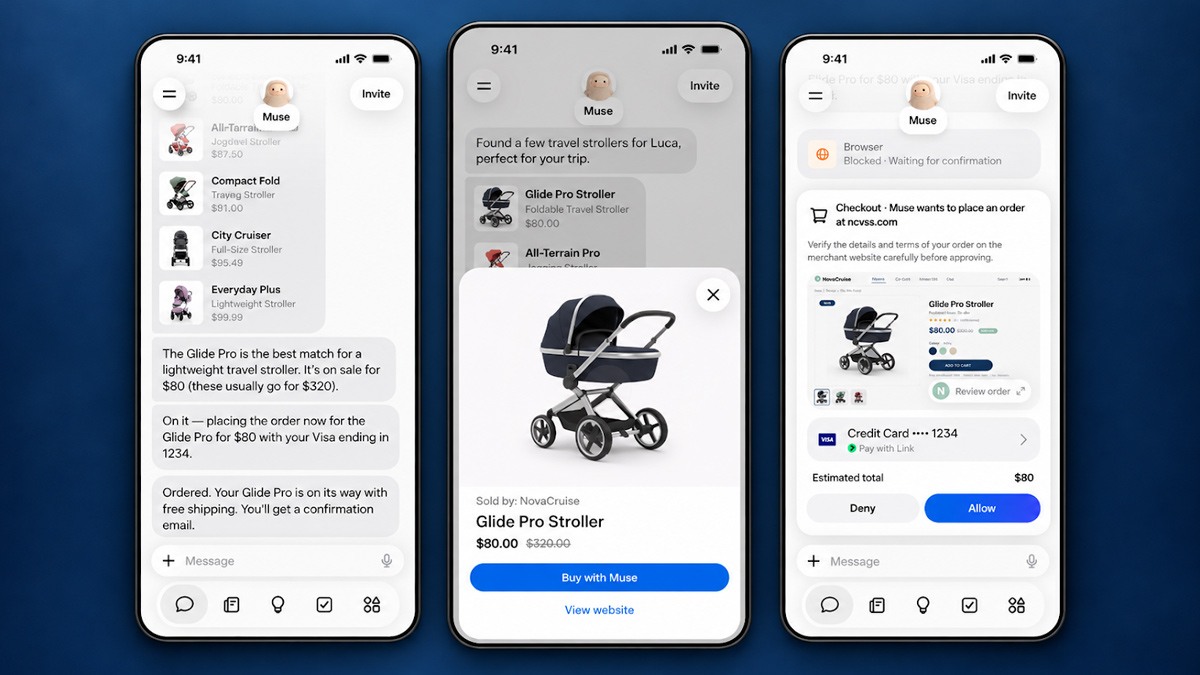
MUMBAI: The shopping cart is becoming a battleground for AI, with Amazon blocking Meta’s Muse from accessing its retail website after Meta reportedly declined Amazon’s request to remove the retailer from the AI experience.
Meta launched Muse earlier this month as an AI agent designed to move beyond answering questions and carry out tasks on behalf of users, including shopping and booking appointments. The technology points towards a future in which consumers could hand over more of the online buying journey to AI rather than navigating websites themselves.
Amazon, however, draws a line at third-party agents automatically browsing its marketplace or making purchases without permission. The retailer reportedly began blocking Muse on Sunday night, with users attempting to access Amazon through the agent seeing pop-ups saying the activity violates Amazon’s terms of use.
The disagreement highlights a bigger question around agentic commerce: when an AI agent becomes the shopper, who controls the relationship between the customer, retailer and technology platform?
According to Bloomberg, Amazon spokesperson Lara Hendrickson said third-party applications making purchases on behalf of customers should operate transparently and respect a business’s decision on whether to participate.
Amazon has argued that agentic applications should work on an opt-in basis, broadly comparable with food-delivery and travel platforms where businesses decide whether and how they participate.
The clash also comes as Amazon develops its own AI-powered shopping capabilities, while simultaneously restricting rival agents from navigating its marketplace. The company has already been involved in another dispute over AI shopping agents, having sued AI startup Perplexity last year. Amazon alleged that Perplexity attempted to conceal its shopping agents after being asked to remove them.
That case, along with the Muse dispute, is becoming an early test of how retailers and AI companies will divide responsibilities as software agents begin acting on behalf of consumers.
For now, the commercial consequences of blocking Muse may remain limited. Consumers still largely use AI tools to research products, compare prices and gather information rather than allowing agents to complete purchases independently. But if that behaviour shifts, retailers could face a much larger change in how customers discover and buy products.
For Amazon, that could extend beyond transactions. A greater shift towards AI-led shopping could also affect its advertising ecosystem, where control over product discovery and customer intent has significant commercial value.
Amazon CEO Andy Jassy has previously acknowledged that agentic shopping still has shortcomings, including instances where AI bots provide incorrect basic information such as prices and product details. He has said Amazon has been in discussions with companies developing such systems to improve the experience and find an approach that works for both customers and businesses.
The Muse block therefore puts a very current question on the checkout counter: as AI agents become better at shopping for people, will retailers open the door, or insist that the bots knock first?