


MUMBAI: The AI race is picking up speed, but some of its former drivers are asking whether the brakes are keeping up.
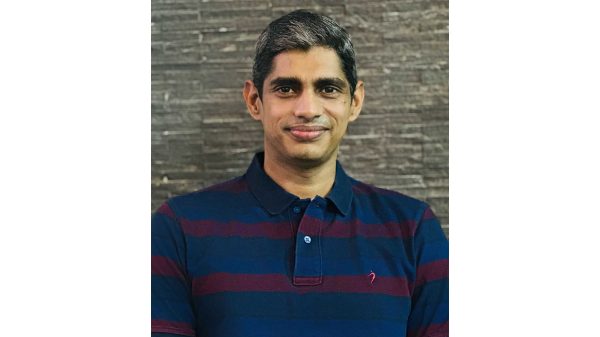
Alexander Turner, a former Google DeepMind researcher now working independently on AI, has backed concerns raised by Jacob Coxon, a former OpenAI and Anthropic researcher who recently resigned from Anthropic over the industry’s push towards increasingly autonomous, self-improving AI systems.
Turner said Coxon’s concerns were familiar from his own work on advanced AI, adding another voice from within the frontier AI research community to the debate over whether safety research is advancing quickly enough alongside AI capabilities.
Coxon said he had spent the past three years working on pretraining research at OpenAI and Anthropic before leaving the industry. He has criticised both companies for racing towards self-improving superintelligence, arguing that competition between AI labs could make it difficult for any single company to slow down.
He has described the race as effectively “gambling with our lives” and called for greater coordination between AI companies and government involvement in the development of increasingly powerful systems.
The concerns are not limited to former researchers. Evan Hubinger, who leads an alignment science team at Anthropic, has also said Coxon was right to be concerned. Hubinger estimated that there is a greater than 10 per cent chance of AI causing human extinction within the next decade, while acknowledging that Anthropic does not yet have a complete solution for aligning future superintelligent systems with human goals.
That figure is a risk assessment rather than a prediction that such an outcome will occur.
The wider debate is gaining momentum as AI companies compete to develop more capable models and autonomous agents. OpenAI chief scientist Jakub Pachocki has also warned that society is not adequately prepared for increasingly capable AI, while researchers across the sector have called for greater coordination around the pace of frontier AI development.
More than 1,300 employees from frontier AI companies signed a statement in July calling for mechanisms to deliberately pace the development of advanced AI systems. Both Anthropic and OpenAI have acknowledged that there may eventually be a need to manage the pace of frontier AI development.
The argument now extends beyond how powerful AI can become. The bigger question is whether researchers can understand, control and safely align systems as they become more autonomous.
For Turner and Coxon, the answer is far from settled and the industry’s sprint towards superintelligence may need a closer look at the safety lane before it accelerates further.