
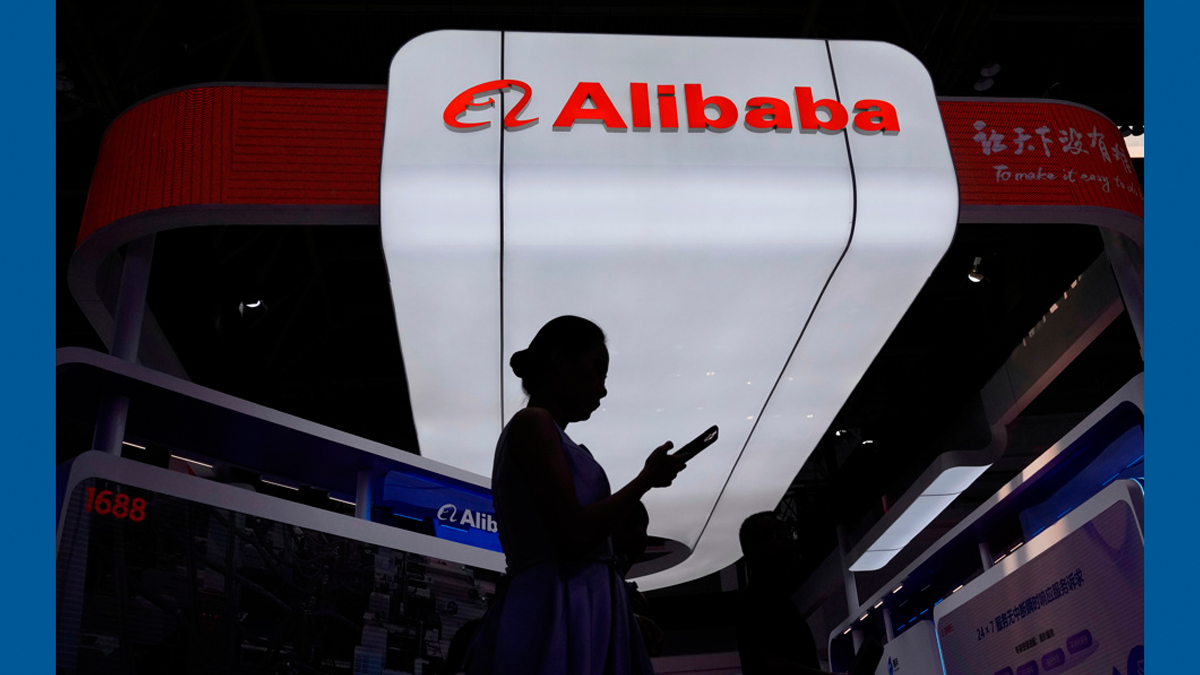
BEIJING: Looks like the AI code war has entered a fresh debugging phase. Alibaba has instructed its employees to stop using Anthropic’s AI coding assistant Claude Code, opting instead for its own platform as tensions between the two AI rivals continue to escalate. According to a Reuters report, the Chinese technology giant has directed employees to use its in-house coding platform, Qoder, after concerns emerged that Claude Code contained features capable of identifying users linked to China.
The move marks the latest flashpoint in an increasingly public dispute between Alibaba and Anthropic, which intensified last month after the US AI company accused Alibaba of carrying out large-scale model distillation, the practice of training one AI model using the outputs of another.
Anthropic outlined the allegations in a letter sent to two US senators, reviewed by Reuters, claiming Alibaba had used outputs generated by Claude to train a less capable AI model. Alibaba has not publicly responded to the allegations. Despite Anthropic restricting access to Claude Code for users and organisations in China, the AI programming assistant has remained popular among Chinese software developers, the report said.
The latest concerns stem from reports that Claude Code included experimental mechanisms capable of examining elements of a user’s computing environment, including timezone and proxy-related information, while attaching markers to prompts sent back to Anthropic’s servers.
An Anthropic employee later stated on X that the feature had been introduced experimentally in March to combat abuse by unauthorised resellers and to protect the company’s AI models from distillation attempts.
While individual developers could bypass some of Anthropic’s access restrictions by routing internet traffic through overseas servers, the report noted that enterprises faced greater legal, compliance and security considerations, making such workarounds impractical.
The episode highlights the widening technological divide between the United States and China as AI companies tighten safeguards around proprietary models. As access to leading US AI systems becomes more restricted, Chinese developers and cloud providers are increasingly adopting domestic and open-source alternatives such as Alibaba’s Qwen, DeepSeek, Moonshot and Zhipu.
At the same time, Chinese AI models are expanding their presence in international markets, including the United States, intensifying competition and raising fresh questions around AI security, intellectual property and cross-border technology access.