
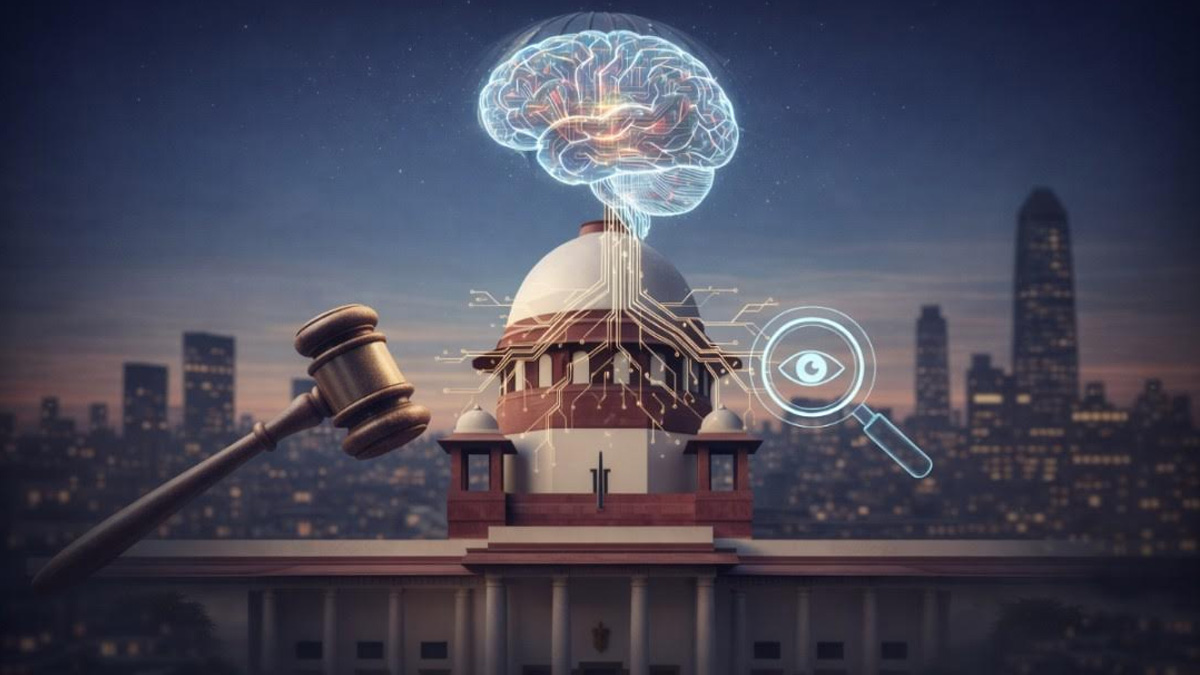
MUMBAI: Justice may be blind, but it won’t be fooled by artificial intelligence. In a landmark warning on the growing use of AI in legal practice, the Supreme Court has drawn a hard line against unverified AI-generated judicial precedents, making it clear that fabricated legal citations have no place in Indian courtrooms.
Adopting a zero-tolerance approach, the apex court ruled that advocates who cite AI-generated judicial precedents without verifying their authenticity could face disciplinary action, stressing that lawyers have a professional obligation to ensure every legal authority placed before a court is genuine.
The observation came while the Supreme Court set aside an order passed by the National Company Law Tribunal (NCLT) in the Essel Infraprojects insolvency case after discovering that the tribunal had relied on AI-generated material presented as judicial precedents, according to a Bar & Bench report.
A Bench comprising Justices PS Narasimha and Alok Aradhe held that submitting unverified AI-generated precedents amounts to professional misconduct, warning that the integrity of judicial proceedings cannot be compromised by fabricated or hallucinated legal material.
The court also directed the Bar Council of India (BCI) to constitute a committee to examine the growing use of artificial intelligence in legal practice and frame comprehensive guidelines governing its use. The committee has also been tasked with recommending disciplinary measures against lawyers who submit fake or fabricated legal authorities before courts.
During its independent scrutiny of the Essel Infraprojects matter, the Supreme Court found that several judicial citations relied upon by the NCLT were either entirely fictitious or contained fabricated extracts.
Making its position unequivocal, the court observed that a judicial decision tainted by even a trace of fabricated material cannot be sustained. It held that such orders deserve to be set aside irrespective of whether the fake material directly influenced the outcome, as even “an iota” of hallucinated content undermines the sanctity of the adjudicatory process.
Consequently, the apex court quashed the NCLT’s order and restored the Section 7 insolvency application for fresh consideration. It directed the tribunal to hear the matter afresh, preferably within two weeks, reinforcing that while AI may assist legal research, the responsibility for truth and accuracy rests squarely with legal professionals.