

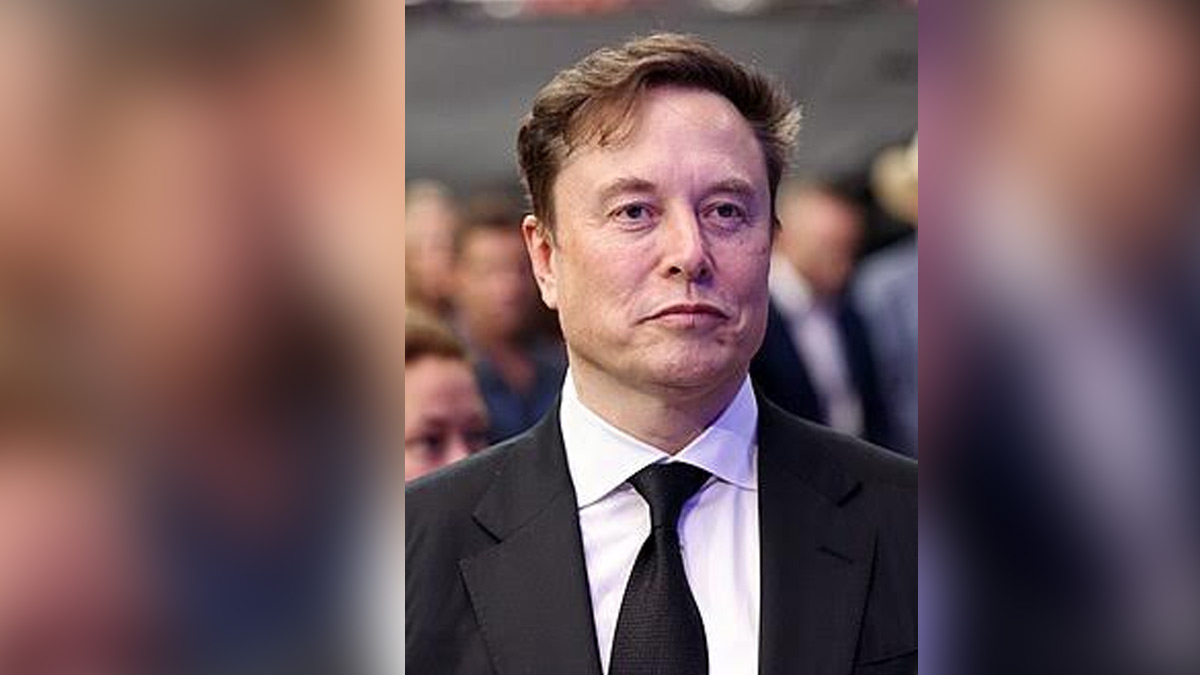
TEXAS: Wall Street has never seen anything like it. On 12 June, SpaceX rocketed onto the Nasdaq under the ticker SPCX, raising $75bn in the largest initial public offering ever recorded, more than triple Saudi Aramco’s 2019 record of $25.6bn. Priced at $135 a share, the stock opened at $150, surged to an intraday high of $176.52, and closed its first session at $160.95, a 19 per cent first-day pop that left every other corporate debut in history looking pedestrian. The listing valued SpaceX at roughly $1.77 trillion and pushed Elon Musk’s net worth to approximately $1.1 trillion, making him, formally and without contest, the world’s first trillionaire.
For media trade observers, the temptation is to file this as a billionaire-tracker story and move on. That would be a catastrophic misreading.
The machine under the bonnet
SpaceX’s revenues hit $18.7bn in 2025, up from $14bn in 2024, with Q1 2026 already clocking $4.7bn, annualising at roughly $19bn before any second-half ramp. But the financial architecture is what matters. Starlink, the connectivity segment, generated $11.4bn in 2025 at a jaw-dropping 63 per cent EBITDA margin, throwing off $7bn in segment profit, cash that funds everything else the prospectus lights on fire. Starlink’s subscriber base has grown to approximately 10.3 million users across 164 countries, and three-quarters of all active manoeuvrable satellites in low-Earth orbit belong to SpaceX. There is no credible second-place competitor.
The losses, however, are equally spectacular. SpaceX swung to a net loss of $4.9bn in 2025 after absorbing the money-losing xAI, a reversal of the $791m profit it posted in 2024. xAI operations alone burned through more than $6bn in 2025 and a further $2.5bn in Q1 2026. Musk is, in effect, using Starlink’s gushing cash flows to subsidise the most aggressive artificial intelligence build-out in corporate history.
Three reasons media and telco executives cannot look away
One: the death of the terrestrial tower. Traditional telecom operators have long treated satellite connectivity as a niche fallback for ships and soldiers. The valuation assigned to SPCX by institutional investors signals the market believes the opposite, that the satellite is the future tower. Starlink’s direct-to-cell architecture beams high-speed data directly to unmodified smartphones, bypassing ground infrastructure entirely. For Indian telcos already sweating their balance sheets over 5G monetisation and rising operational expenditure, a hyper-capitalised, space-based carrier layer changes the competitive matrix in ways that no amount of spectrum auction spending can address.
Two: AI computing leaves the ground. SpaceX’s S-1 filing discloses ambitions for orbital data centres, a logical extension of the xAI integration. The COLOSSUS supercomputer in Memphis is already a one-gigawatt cluster, the largest coherent AI training facility on Earth, and the growth plan involves putting a version of it in orbit, where solar power is constant. SpaceX’s Colossus 1 facility has already secured a contract with Anthropic worth $1.25bn per month through May 2029, approximately $40bn over its life, housing 220,000 Nvidia GPUs across 300MW of power, built in 120 days. For media networks, streaming platforms and high-volume digital publishers, the future of content delivery and real-time data processing is moving off the terrestrial grid.
Three: content distribution, redrawn. Legacy direct-to-home satellite television is in structural decline. Connected TV has been constrained by patchy fibre-optic footprints. A fully funded Starlink network dissolves that distinction overnight, collapsing the gap between rural and urban media consumption markets globally. For sports broadcasters eyeing the Fifa World Cup 2026 and beyond, SpaceX has just positioned itself as the inescapable, single-owner distribution pipe, one that answers to no local regulator, no national broadband plan, and no legacy infrastructure partner.
The governance sting in the tail
None of this comes without risk. Musk retains an estimated 80 to 85 per cent of voting rights, leaving public shareholders with limited influence over strategy. SpaceX trades at roughly 90 times sales, against Tesla’s 14 times, a striking premium for a company that swung to a $4.9bn net loss in 2025. SpaceX’s own filing claims it can eventually pull in more than $28.5 trillion in revenue from its addressable markets, a number so vast it either represents visionary ambition or the most audacious prospectus boast in the history of securities law.
The bottom line
History’s most powerful corporations once controlled oil wells, steel mills and rail lines. The late digital age handed supremacy to those who owned software and user attention. The SPCX listing inaugurates something new entirely: a single entity that controls the rockets, the satellites, the global data pipes, the AI compute layer and now, with $75bn in fresh public capital, the means to scale all of it simultaneously.
Every terrestrial broadcaster, every national telco, every streaming platform is now operating beneath the gravitational pull of a $1.77 trillion orbital monopoly. The only question worth asking in any boardroom right now is not whether SpaceX will reshape your business, but how fast, and whether you have a plan for when it does.