

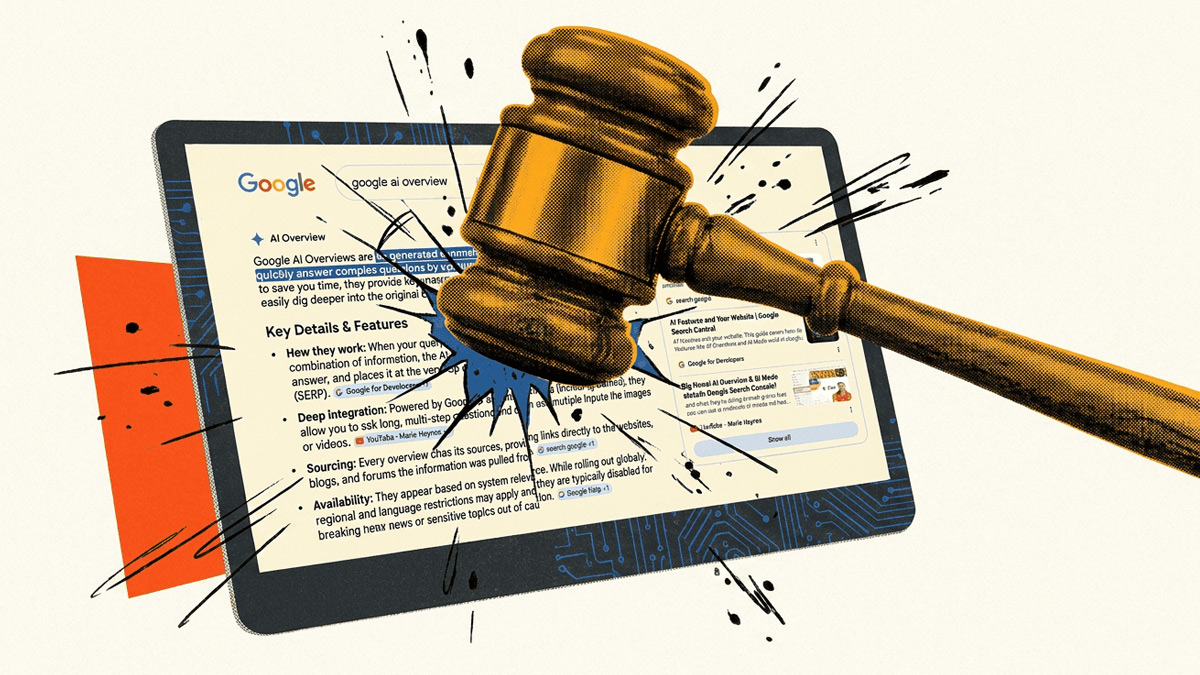
MUMBAI: For Google’s AI, a summary has turned into a summons. A German court has ruled that when artificial intelligence gets the facts wrong, the tech giant behind it cannot simply point users elsewhere for answers. Google has suffered a significant legal setback in Germany after a Munich court ruled that the company can be held directly responsible for false statements generated by its AI Overview feature, marking one of the clearest judicial challenges yet to AI-generated search content.
The Regional Court of Munich issued a temporary injunction after two local publishers alleged that AI-generated summaries falsely linked them to scams, subscription traps and questionable business practices. The publishers argued that the claims were entirely untrue and sought legal action after what they described as an inadequate response from Google.
At the heart of the dispute was a question that is becoming increasingly important in the AI era: who is responsible when artificial intelligence creates inaccurate information?
Google argued that AI Overviews should be treated similarly to traditional search results, noting that users can verify information by reviewing the linked sources. The company also maintained that people generally understand AI-generated content may contain inaccuracies and should not be accepted without scrutiny.
The court was unconvinced.
In its ruling, the judges concluded that AI Overviews go beyond merely displaying search results. By analysing, combining and rewriting information from multiple sources into a new summary, the feature effectively creates original content generated by Google, the court said.
The judges also found that some disputed claims could not be traced back to the sources cited by the AI system and, in certain instances, did not appear in the underlying search results at all.
That distinction proved crucial.
According to the court, the fact that users can click through to source material does not absolve Google of responsibility. AI Overviews function as self-contained summaries that many users may read without consulting the original links, making the accuracy of those summaries especially important.
The court granted most of the publishers’ claims and warned that similar inaccuracies could be generated again in the future. Google was ordered to bear 80 per cent of the legal costs, while the two publishers were directed to cover 10 per cent each.
The ruling arrives at a sensitive time for the company as regulators and courts worldwide grapple with how existing laws should apply to generative AI products.
It also follows another legal setback for Google in India. In May 2026, the Delhi High Court ordered the company to pay Rs 30 lakh in damages to sanitaryware manufacturer Hindware in a trademark infringement dispute linked to its advertising platform. The case centred on allegations that competitors were able to use the “Hindware” trademark as a keyword, allowing rival advertisements to appear in related searches.
Together, the cases underscore a growing trend: as AI becomes more deeply woven into search and digital services, courts are increasingly examining whether technology platforms can continue to act as neutral intermediaries or whether they must accept greater responsibility for the content their systems create.