
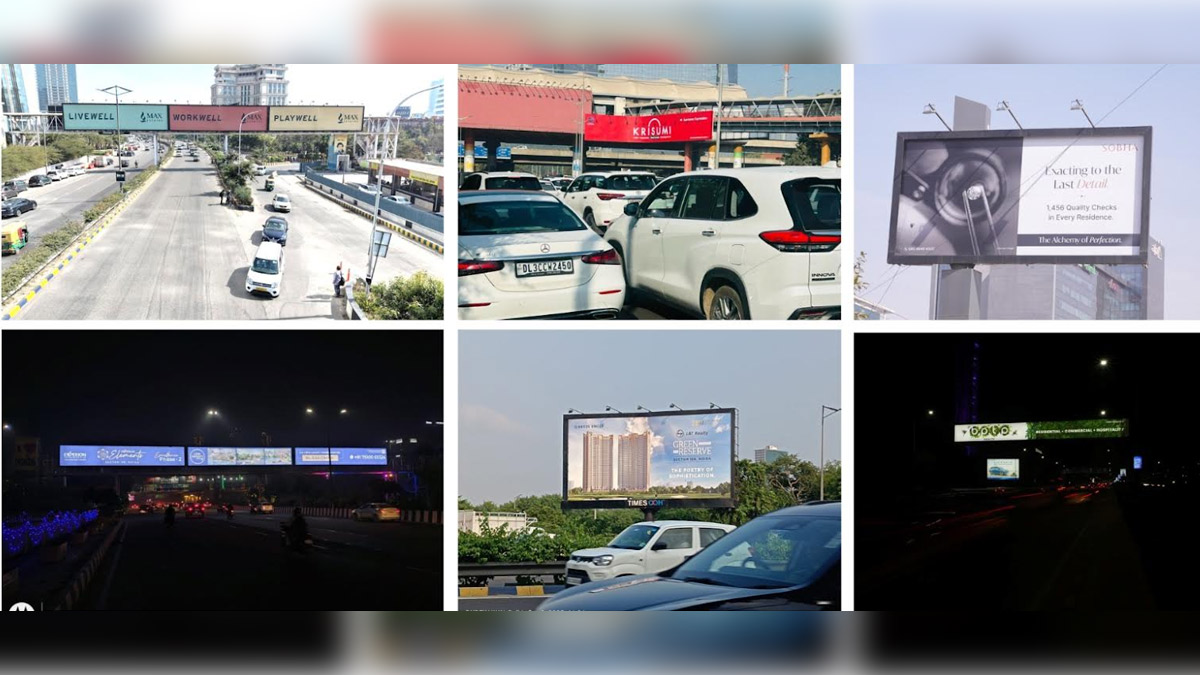
DELHI: OSMO is seeing a noticeable shift in how real estate developers plan outdoor campaigns, with attention now taking centre stage over sheer visibility.
In a category often crowded with simultaneous project launches, developers are moving away from blanket coverage strategies and instead focusing on how effectively their campaigns capture and hold consumer attention during critical launch windows.
Over the past year, OSMO has worked on multiple campaigns for developers such as Max Estates, Sobha Limited, Experion Developers, The House of Abhinandan Lodha, L&T Realty, Krisumi Corporation and BPTP, reflecting a broader industry move towards more structured and data-led OOH planning.
Traditionally, outdoor campaigns in real estate leaned heavily on scale, with brands chasing maximum presence across sites. But as clutter grows and campaigns increasingly overlap, that approach is delivering diminishing returns. The new playbook focuses on high-impact placements, reduced proximity to competing projects, smarter audience mapping and phased visibility aligned to both launch and post-launch phases.
OSMO co-founder Nipun Arora said, “In real estate, the launch window is where perception is built and momentum is created. In a cluttered environment, visibility alone is not enough. What matters is how decisively a brand is able to command attention.”
At the heart of this shift is LOC8, OSMO’s proprietary attention intelligence platform, which evaluates outdoor media using metrics such as visibility, dwell time and audience movement. The aim is to move beyond traditional measures like traffic volume and inventory availability, enabling sharper decisions on site selection, frequency and timing.
OSMO co-founder Mangesh Shinde said, “The idea behind LOC8 was to move away from inventory-led planning to attention-led planning. Once you understand where attention genuinely exists, every decision becomes sharper and more effective.”
OSMO believes this evolution is gradually redefining outdoor advertising in real estate, shifting it from a visibility-first medium to a more performance-driven channel. As competition intensifies and attention spans shrink, the message is clear: it is not about being everywhere, but about being noticed where it matters most.